April is the cruellest month, breeding
Lilacs out of the dead land, mixing
Memory and desire, stirring
Dull roots with spring rain.
T. S. Eliot, The Waste Land, 1922
No child ever made a more spectacular first impression than I did. My presentation to my extended family late in 1945 was so remarkable no one ever forgot it. I only learned the story in April of 2012. April, when Texas is covered in bluebonnets, and my cousin Beverly and I spent a week touring the landscape of our youth.
I live in northern Virginia; she lives in Fort Worth, but after a good deal of planning, I flew to Fort Worth, she picked me up, and we headed south to visit her daughter in Spring, Texas, just outside Houston. After a reunion in Dickenson with the remaining offspring of the Sisters Benskin (at the home of Scary Cousin Ray and his gracious wife Susan), we drove to Texas City.
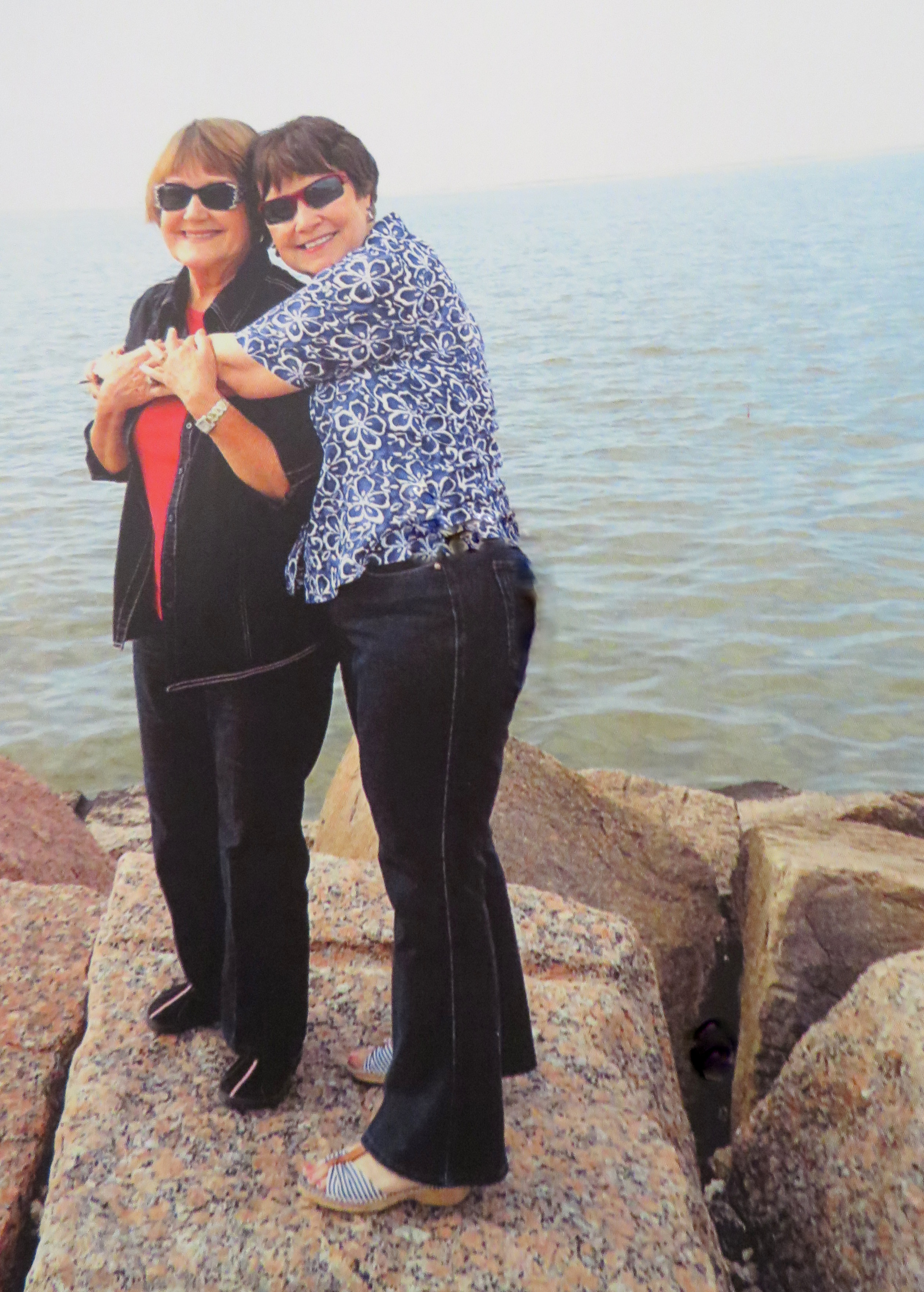
Bev and me on the TC Dike, April 2012.
We spent two euphoric days driving around TC, eating at the Terraza Mexican Bar and Grill, formerly known as the Terrace Drive-in. We took pictures of places we lived and schools we attended, and we met the man who now lives in the Fourth Avenue garage apartment across the alley from St. Mary’s, where Bev was once a bride.
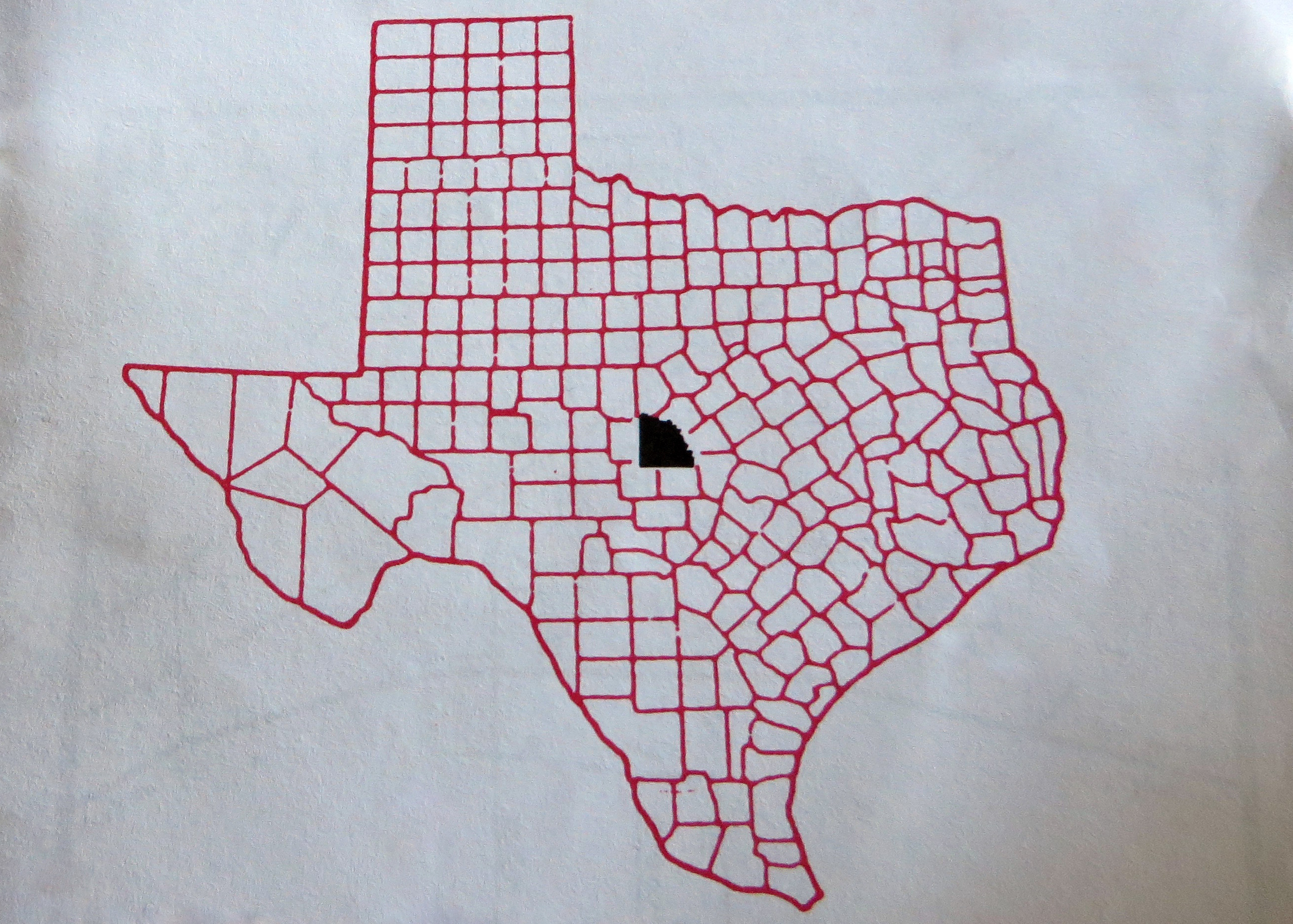
San Saba County
Then we headed into the heart of Texas, to San Saba, Cherokee, and Llano, where our grandparents came from and moved back to when they left Texas City. We visited the graves of our grandparents and great grandparents, and not only did we see the home where our grandparents lived when we were children, we were spotted by the present owner, and she invited us in to look around.
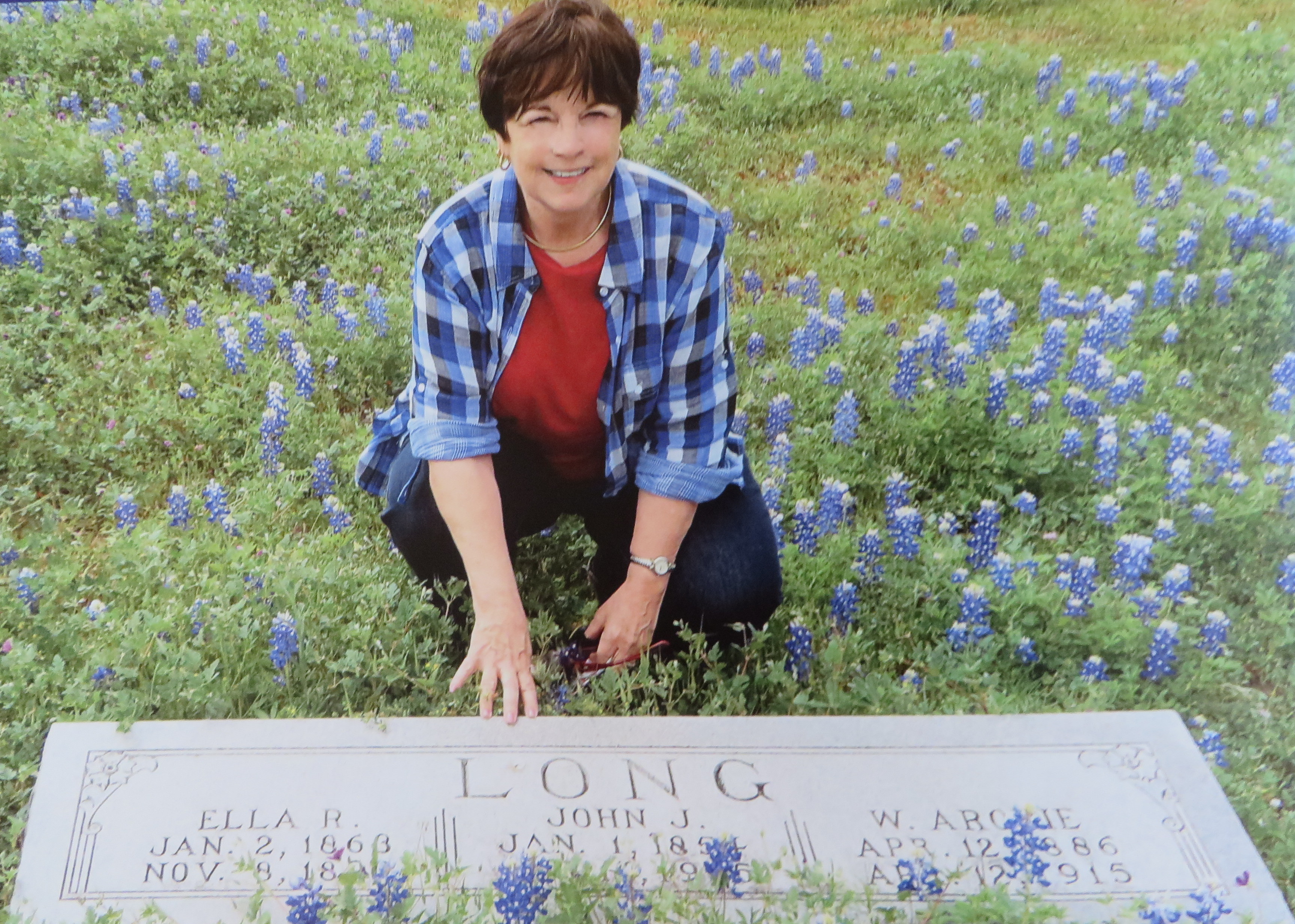
Surrounded by bluebonnets at the grave of my great great grandfather, John J. Long.
When we were girls, San Saba and Cherokee were small but thriving. Now they’re all but shut down, the occasional open café far outnumbered by boarded up businesses that used to be. Bev and I in her sleek white Lexus stood out. Every time we stopped, someone approached us. If no one was around, someone circled in their truck, got out, and came over.
“Can I help you?” “Looking for someone?” “Lost, are you?”
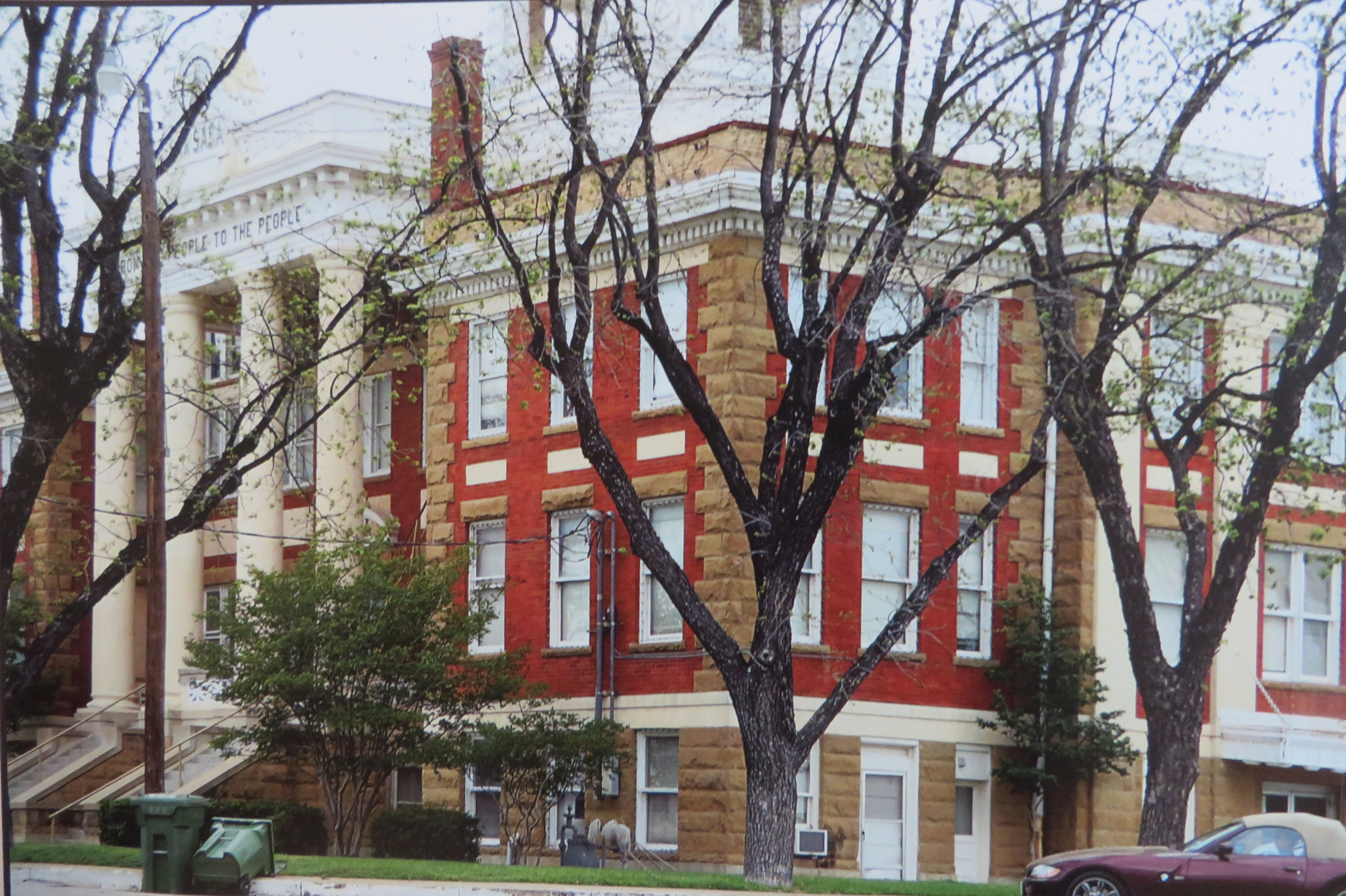
The beautiful San Saba County courthouse. All but a few businesses around it are gone, just empty sandstone shells.
Toward the end of the trip we pulled up in front of a clapboard house in Cherokee. I didn’t remember it, but Bev said our grandparents once lived there, before the house in San Saba. It wasn’t quite the same. It had an addition, or a new porch, or maybe a shed had been torn down, but she was sure it was the place.
A change came over her, a light in her head, a remembrance. “There! That’s where I saw you for the first time. Right over there.”
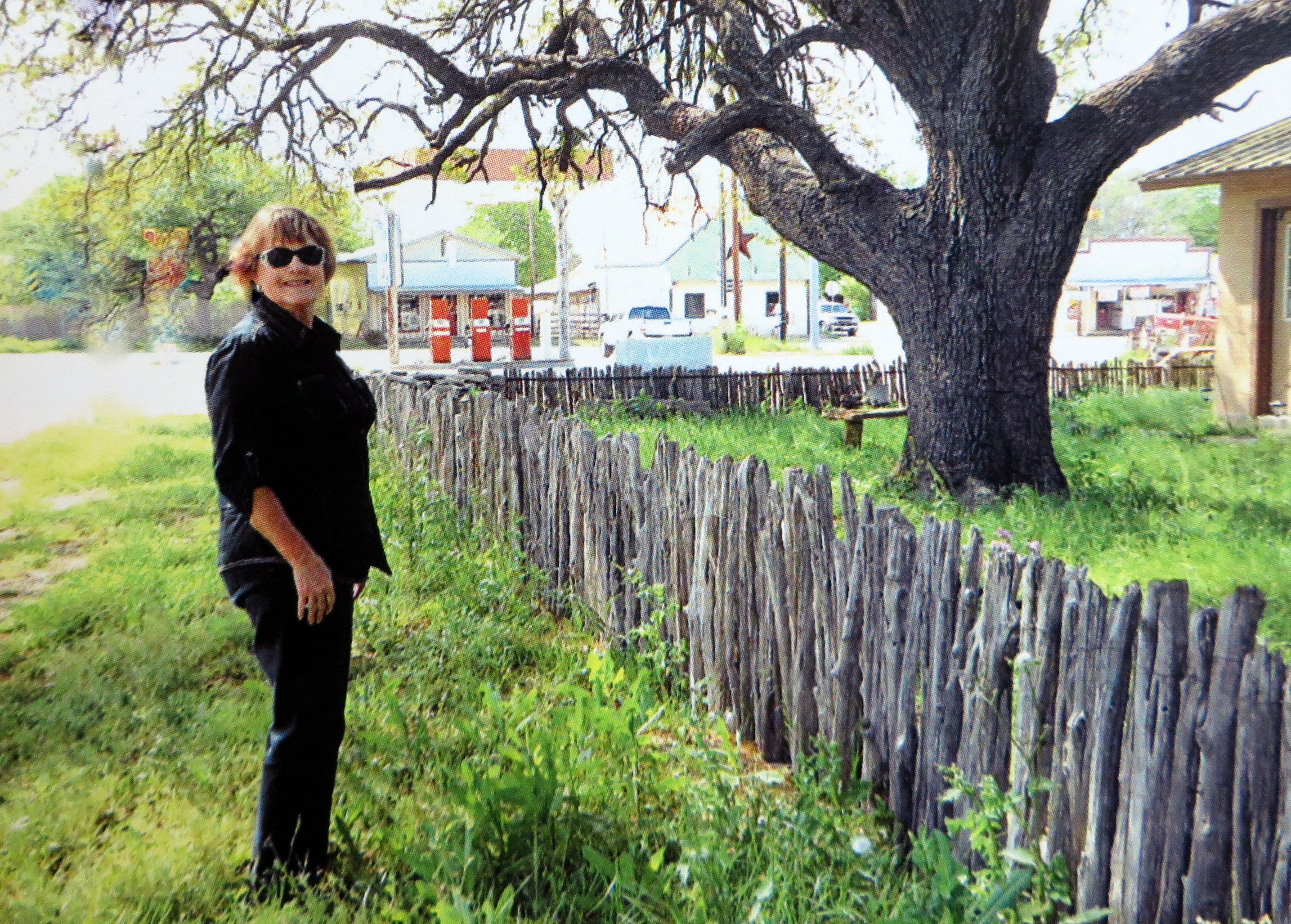
Bev in Cherokee, on the spot where she first saw me.
I don’t know if she remembers this tale, or if she heard it so many times she thinks she remembers it – she could only have been three or four years old, but this is the story she told me:
“Aunt Hazel (my mother, the Butterfly) had been living in Florida, and everyone was so excited she was coming home and bringing her new husband. Then about a week before we were to meet at Grandma’s and Papaw’s – this house – we got a birth announcement. About you. She hadn’t been married long, but she had a husband now and counting it up wasn’t important. Everybody just wanted to welcome her home. She was always the life of the party, you know, your mother. So much fun.”
I knew the troubling details of my birth, but it’s an old story, and I tried not to think about it too much. However, Beverly’s excitement in relating the tale made me sense there would be something new here.
“Yup.” She continued. “We drove up, and your mother was sitting on the porch, and there you were. One month old. You jumped off the step and started gathering up pecans. You had a ball, and there was a dog, I think. When you saw the car, you waved! My parents just stared. I didn’t understand, of course, and then my dad said, ‘Either that’s the most amazing baby in history, or that kid’s at least a year old!”
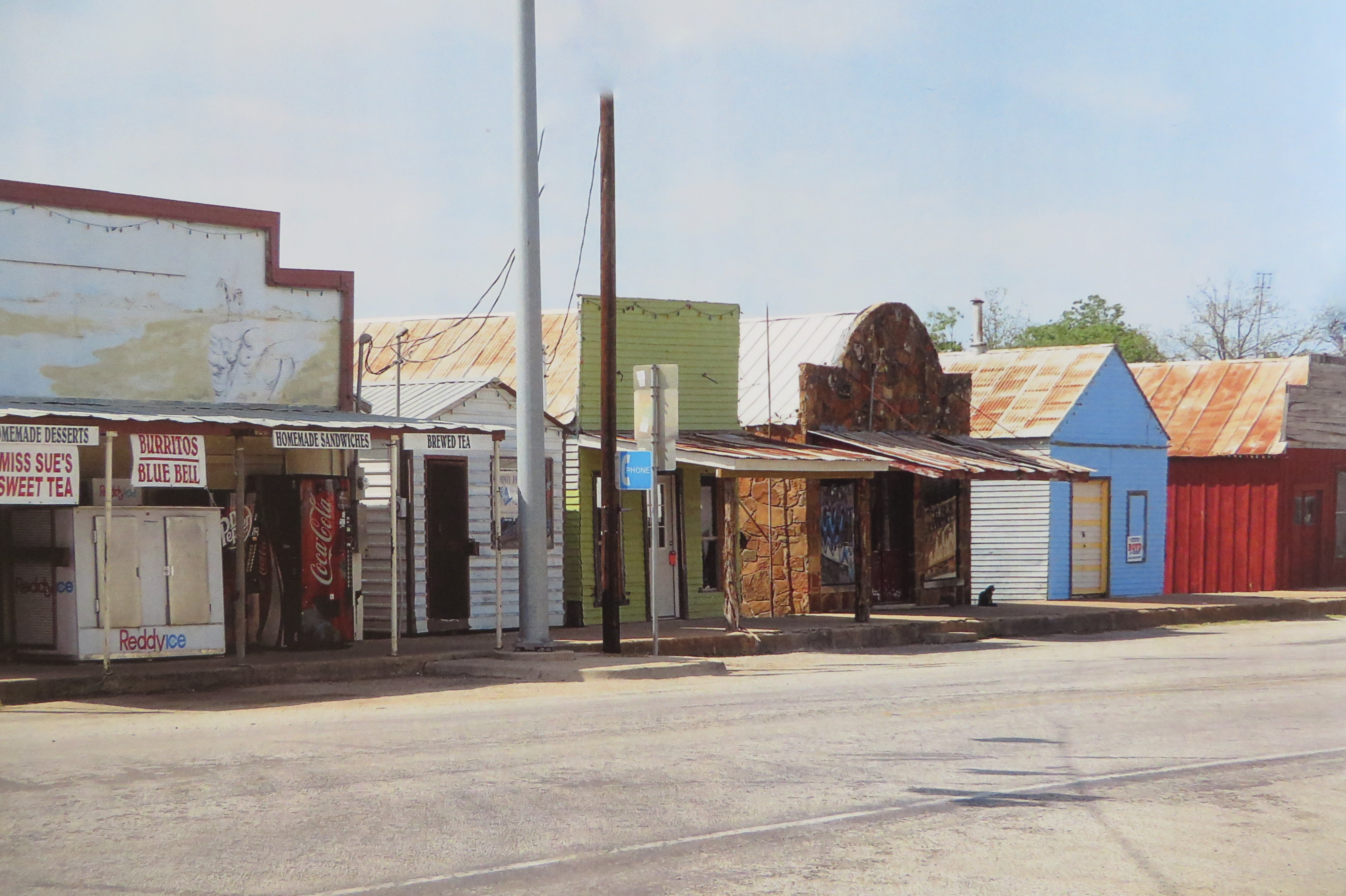
Cherokee, something beautiful about it, but sad.
The part of the story that got to me was not what I already knew. What made me laugh out loud was how exactly like my mother that overdue birth announcement was.
She had married, but she had been away, and no one knew she had a child. She was longing for Texas, so she was cornered. I can hear her thoughts: Oh, dear. What now? I’m going home, and everyone will be shocked. They don’t know I have a baby. Hmmm. I know. I’ll send out birth announcements! I’ll just leave off the year.”
And that’s what she did. She didn’t think no one would notice, but it seemed a great way to lessen the surprise. A perfect solution! And that Benskin reunion goes down in family lore as The Reunion We Met Becky, the running, jumping, ball-throwing 25-pound infant.
And this brings me to the story of the Butterfly and the Bombardier, and it’s a hard story to tell, or even to decide to tell. My mother was ashamed of what happened in Florida, and I wish I could ask her if I can tell it now. But every family – no exceptions – has a story like this. She told me most of it herself; only the birth announcement was new. Did she think I might share it some day? She knew I was a writer. One thing for sure, she had a flair for drama, and she knew it was a good story.
All the players are gone from this earth, my grandparents, my parents, my aunts and uncles. Only a few people are alive who remember my mother, so the story can only matter now in the human and universal sense. I considered leaving out one or two crucial details, but then it wouldn’t be the truth, and understanding her story is to understand something about a whole generation of women. There’s something in it of mothers and daughters, too.
So here’s the story of the Butterfly and the Bombardier. They never should have met, and if it wouldn’t cancel out my own existence, I would wish they never had.

The Butterfly about the time of her first marriage. Picture taken from a locket.
For years I thought my father was my mother’s first husband. He wasn’t. The reason her once-happy home in Texas City had become intolerable is another story, but because it had, she was still a teenager, and she saw marriage to an older man as a way out. There weren’t many options for women at the time. Stay home like a good girl, work in a dime store, or get married. Some women went to college and had careers, but not many in Texas in the 40s.
The war had started, and my mother’s first husband, Ervin, was in the Navy, so when he was sent to San Diego for training, she went with him. Their marriage was unusual from the start. For instance, in deference to her young age and unsewn wild oats, he allowed her to date. Yes, she told me that. Her dates picked her up on the front porch of their rented house and dropped her there when the evening was over. Her husband didn’t mind as long as she didn’t stay out too late. This still floors me.
When Ervin shipped out, my mother went home to Texas. Her older sister Jackie was married, and her younger sister Jinx had graduated from high school. Jinx and my mother were like a powder keg and a spark. They dared each other to laugh louder, dance longer.
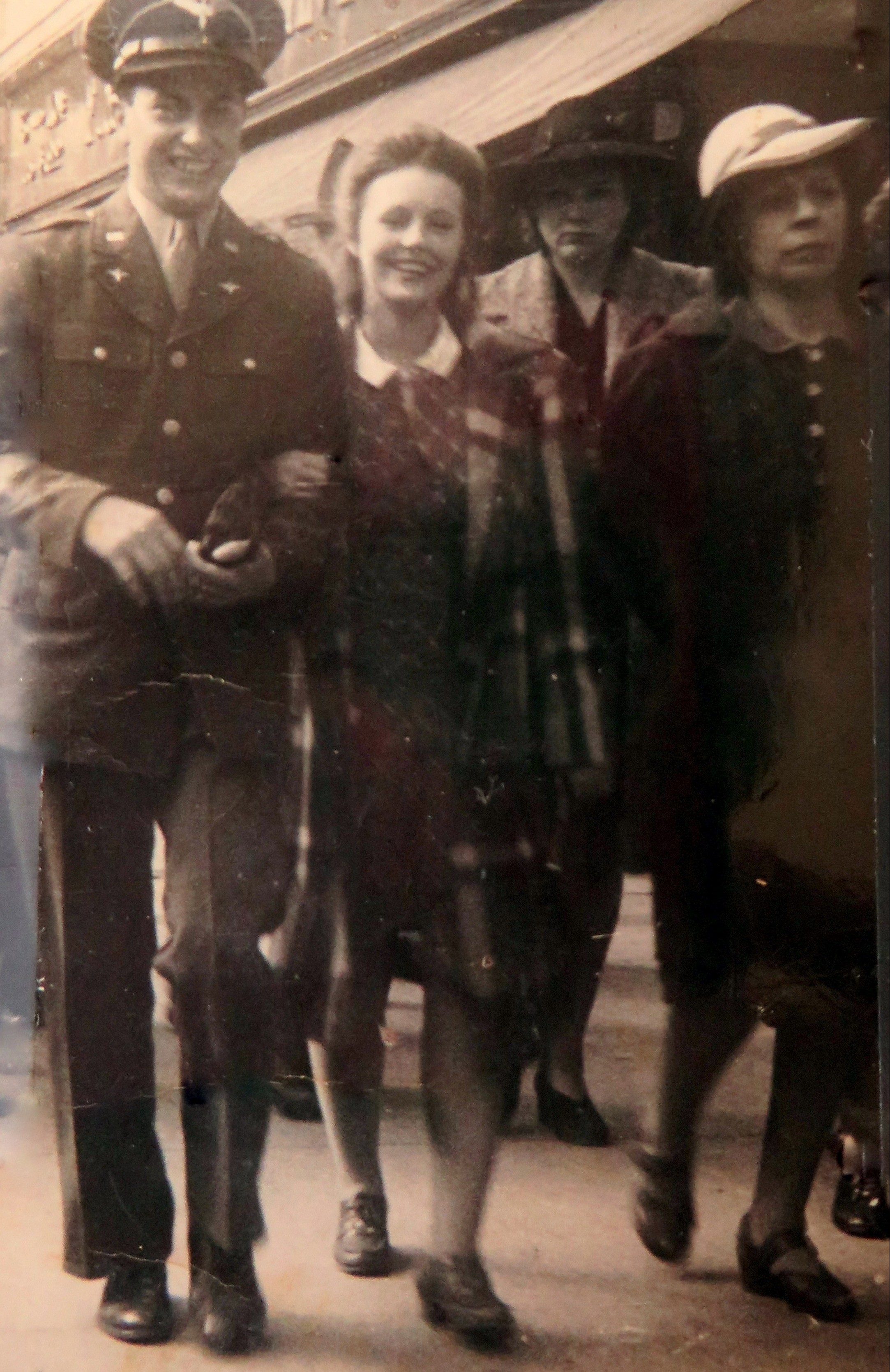
Aunt Jinx early in the war. Something about this photo captures the spirit of the times.
They had cousins living in Florida, and it seemed like a good idea to go somewhere. They headed to Tampa, moved in with the cousins, and had the time of their lives. There was a war on, there were military bases in the area, the place was crawling with handsome young men in uniform and lovely girls who saw the rules as suspended, if not exactly cancelled. “Tomorrow we die” was in the air. By this time my mother knew she had married the wrong man for the wrong reasons. She hadn’t seen him in over two years. She barely remembered him at all. She was young and full of life.
Enter the Bombardier.
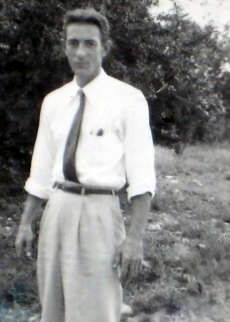
The bombardier, about 1952.
Someone brought him to the house where she lived. When he saw my mother for the first time, he said:
“Jesus. Look at the head on that one.”
She was sitting in the middle of the living room floor winding her hair into pin curls. As a pick-up line, I guess it worked, because they became an item. They were both 23 years old. He was still in the Army, but his war was over due to injuries sustained in Germany.
What do I know about my father? Not much. My mother didn’t talk about him. I once asked my Aunt Jinx, who knew him, to tell me something good about him. I knew the bad stuff – I saw it with my own eyes.
Aunt Jinx thought for a minute. “Well,” she said. “He liked the ladies, and the ladies liked him. He was funny and fun. If he was in the crowd, we knew we would have a good time.” She shrugged. That’s all she could offer.
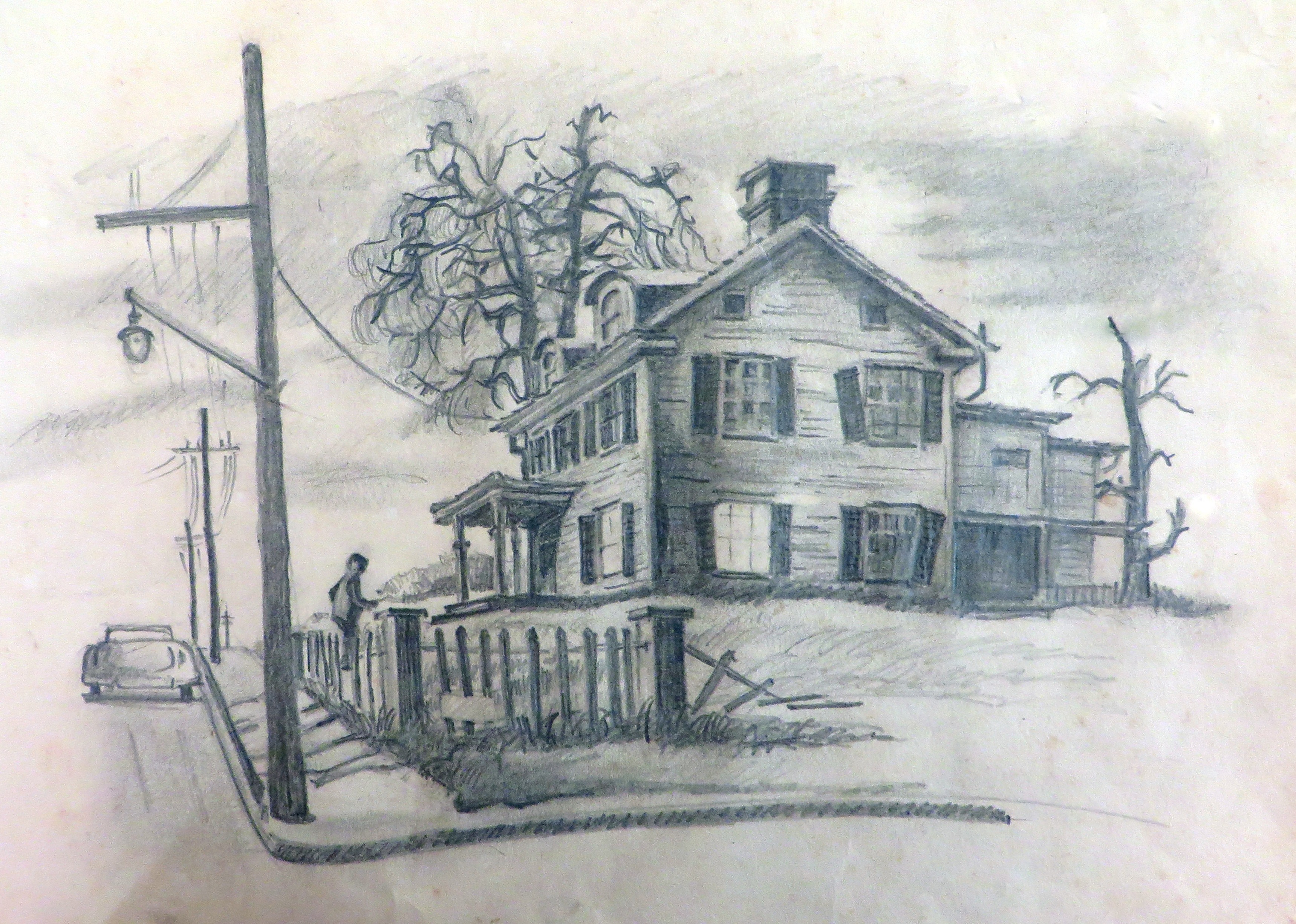
A relative on my father’s side gave me this pencil drawing, the only example of his art I have.
I remember my father’s paintings, which I’ve been told are displayed in galleries in upstate New York. I remember a painting of a hen and her chicks, so vividly wrought I wanted to pick one up and stroke its fuzzy pale head. His art was going to make us rich.
He invented things, tools and toys, one in particular, a small boat he crafted from light-weight wood. He put a balloon inside and fixed the nozzle end so the air would empty into the water. When the air came out, the little boat moved across the bathtub leaving a bubbly, cheerful wake. He named it “JeTug,” with the middle T in caps. The toy was going to make us rich.
I also remember him coming home drunk and beating up my mother, and that’s the last time I’ll mention this, except to say that when I was six years old I promised myself no one would ever, ever treat me that way, and no one ever has.
I don’t know the nature of my father’s war injury, at least not the one that showed. My father’s mother told me that before the war he never drank, and the worst he did was steal his sister’s dolls and put them up in trees. She said he was a born artist, gone to the Army, taught to sit in the nose of a B-24 and drop the bombs. He must have been cold and terrified, and back home he dreamed of killing little babies and old people in cities he would never visit. My grandmother said it ruined him, and it wasn’t supposed to. Both the efficacy and the morality of the blanket bombings in World War II have been re-examined, but at the time he was supposed to feel righteous and get on with his happy life.
Instead, before the war ended, before he mustered out, before they were married, he turned to drink and the consoling arms of my mother.

This is the only picture I have of my parents together, about 1950, in Pennsylvania.
I learned in college that line breaks in poems don’t occur by accident. Like turning points in our lives, the breaks in poetry emphasize, underscore, or create a theme. Breeding – mixing – stirring – roots – rain.
In Texas in April all the breeding, mixing, stirring and rain breeds bluebonnets, not lilacs. My mother in hot, wet Florida. My father just back from the war with a purple heart that didn’t help his broken heart. In Florida in April the mixing and stirring between the Butterfly and the Bombardier resulted in me, accidentally and inconveniently. An understatement.
They were in love, but in point of fact, and no matter how young she was, she was married to someone else, someone away fighting for his country, when she became pregnant with me. And no matter what the war did to him, a man isn’t supposed to abuse a woman.
My mother divorced Ervin and married my father within a week, and her family knew this, but she was so ashamed of the rest no one she loved knew about me for over a year. There’s always been many ways for men to get in trouble, but back then if a woman was “in trouble,” it meant one thing. As the family historian, I’m in possession of a lot of old letters, some from my mother to my grandmother, and because of the dates, I know I existed, but there’s nothing about dashing off a word while the baby’s sleeping. Nothing about a runny nose, a new toy, or cooing or hair or smiles for the first time. Nothing.
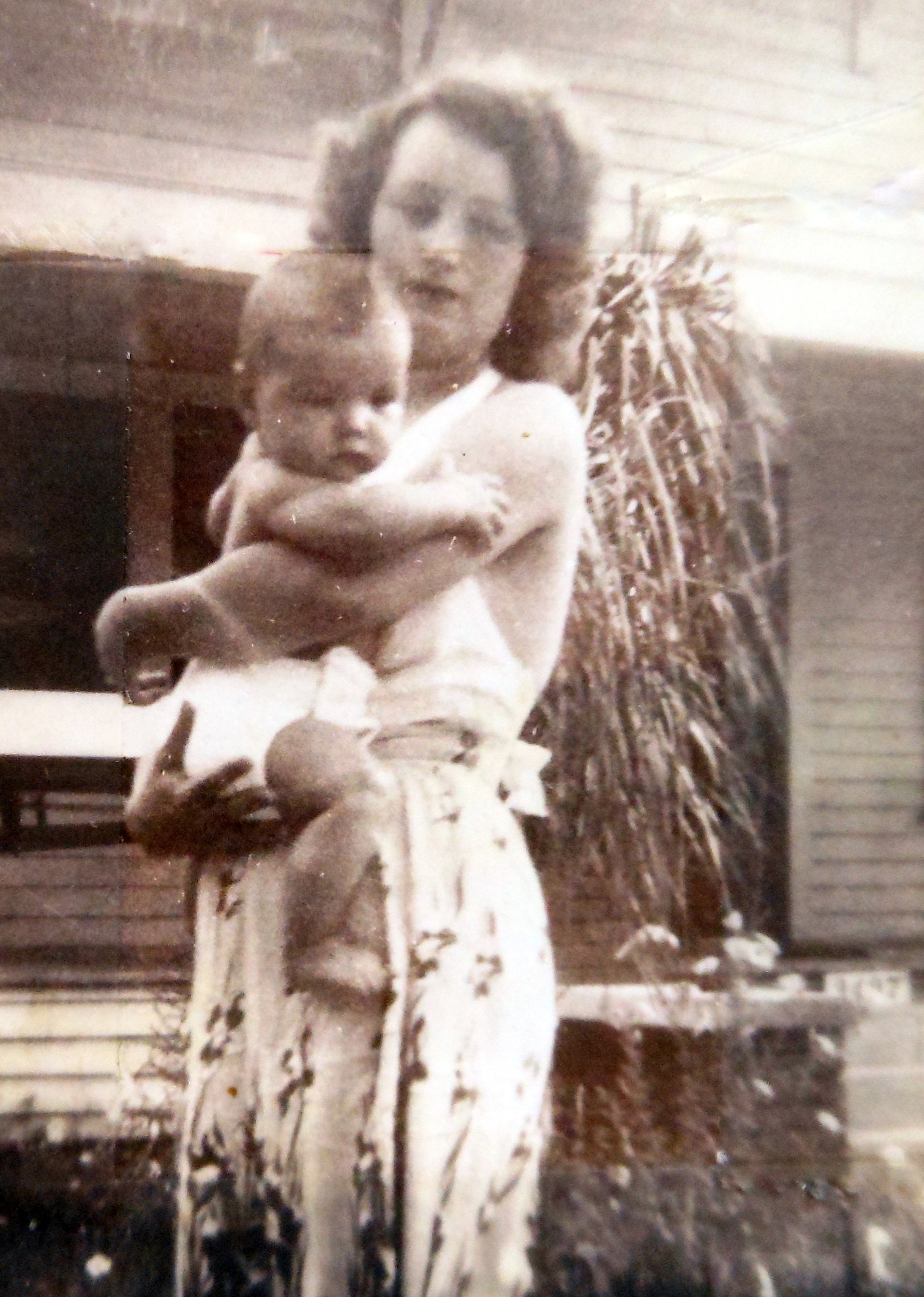
My mother and me, the phantom baby. Neither of us look too happy.
I doubt my mother even remembered the fanciful, way-late birth announcement.
This final piece of the puzzle slipped into place for me in April of 2012, 67 years later. Because Bev and I, cousins and friends, decided to take a road trip into the past, I learned about my debut in the front yard of that little house in Cherokee, where I made the kind of impression relatives talked about for years. Knowing my mother, and how she liked to be the center of attention, how she liked a good story, and loved her family, and loved a good laugh, I think she would approve of this telling.
Because of the events in this story, I grew up sensing an ambivalence in my mother’s attitude toward me. Being a mother myself, I know that no matter how happy the event, mixed feelings are born with every first child. Your own girlhood is over, whether you’re 14 or 40. Nothing will ever be the same, not when they’re out of diapers, not when they graduate from high school. Not the same, not ever. What I knew about my parents forced me to wonder if I was the worst thing that ever happened to my mother.
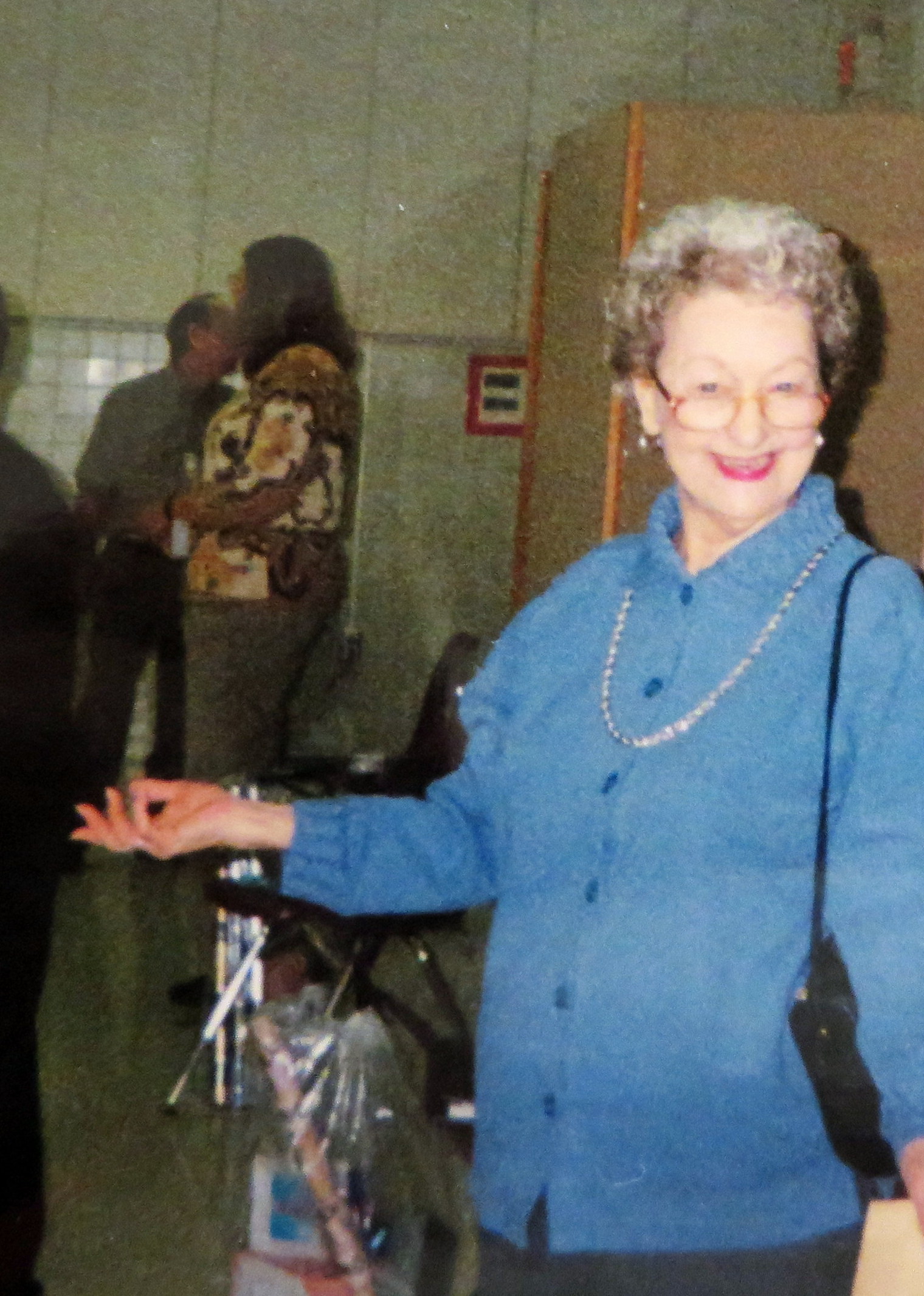
My mother in November 2004, nine months before her death. She was 83 and had just voted for the first time. She was proud of that.
This last is not a hazy memory, or a second-hand account. This is what happened when my mother died 10 years ago, right here in the room where I’m writing it down.
If all things aren’t healed by time, time does allow for closure and peace. As she lay dying the Butterfly squeezed my hand and answered a question she knew I would never ask. The last thing she said before she slipped into a deep sleep and then slipped away, was this:
“You’re the best thing that ever happened to me.”
NEXT: Danise and the Magical Summers
 Tuesday in Texas
Again, WOW. Your writing is beautiful!
LikeLike
I hope half as beautiful as your paintings. From Rebecca-the-writer to Rebecca-the-artist, thank you for reading my blog, and thanks for the kind words.
LikeLike
Once again I loved it. You are truly a writer. I wish I could put my thoughts out there,but somehow the always get stuck. Love you Becky and I loved your mom.
LikeLike
Thanks, Danie-boo. Love you too, and your mom. Good things about both of you next week! xxoo
LikeLike
This is terrific….more, more.
LikeLike
Thanks, Jane. It’s a labor of love for the town and the people I grew up with. As long as people read it, I’ll keep doing it.
LikeLike
Gene wants to know if you remember when your mom damaged her car at the service station near their shoe shop. He thinks that is when he first met y’all.
LikeLike
I do remember that, but in my memory Danise and I met Gene at the shop before that. That’s the tricky part about memory, isn’t it? Gene’s name pops up in my next blog post — picture, too. You two are so much a part of my happy memories.
LikeLike
I love your blog. I’m moved by your reminisces, and I’m learning things about you I never learned while we were roommates in Houston and Germany. You are such a talented writer. Texas City will always be a special place for me and reading your stories just makes it more special. I’m looking forward to more “remembrances” from you.
LikeLike
I’m pleased you like it, and you’ll be turning up, but don’t worry. I honestly don’t think I could think of anything bad, ever. You were more tolerant of me than I deserved sometimes, and our trip to Indiana is something I still talk about. I learned a lot in JA, and our friendship grew out of that, remember?
LikeLike
Once again Rebecca Long, your writing is fantastic! Thank you for sharing your story with us.
Can’t wait for next Tuesday.
LikeLike
Thanks, Karen. Writing is both hard and easy, but knowing people like reading what I write inspires me to keep going, especially the part about “can’t wait for next Tuesday.”
LikeLike
Ohh, Rebecca..! So poignant a memory of you, your Mom and family. Your writing is all the more special because it is from you.. and of the stories you’ve shared with me and Andy as we’ve gotten to know you and Brian. I love your writing! You create such a vivid impression of life and times in our parents world. I love your caring depiction of human frailty. Write on! I eagerly await more! You go girl!!
LikeLike
Thank you, Phyllis. When I talked about my mother’s death with you and Andy that time, I couldn’t tell you what she said. I was almost crying already. Tt’s one thing to write it, but I would have broken down if I had tried to say it. You’re a sensitive reader, and I appreciate that. (But stop beating me so badly at WWF, ha ha.)
LikeLike