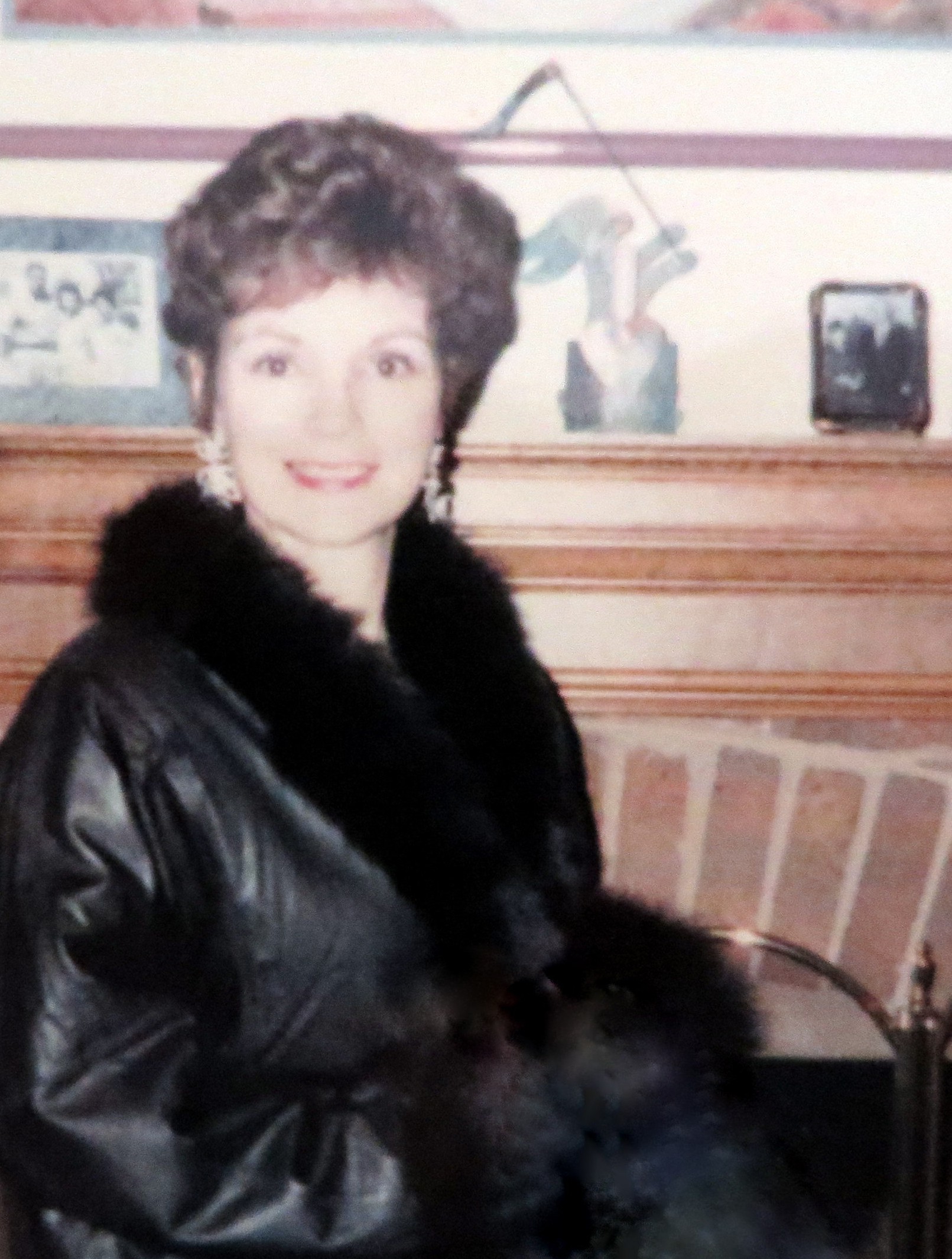
Christmas, 1985.
Christmas lends elegance to parties – the lights, the trees, the sparkling ladies in evening gowns. The neighborhood progressive dinner promised to be full of goodwill and champagne. The entire group of 40 couples gathered for cocktails at the clubhouse, redolent with pine garlands and glossy magnolia leaves. For the sit-down portion of the progress, we would dine in private homes in groups of five couples, and my husband and I were pleased to see we knew some of the couples in our group, but not others. Perfect. Old friends and new. A toast, a blessing, and we dispersed. The holiday season of 1985 in Atlanta, Georgia, was off to an auspicious start.
By the time we re-assembled at the clubhouse for dessert my reputation as a trouble-maker, which I had managed to out-run several times, would be solidified forever, and all because of Texas City, my home town.
What could go wrong in such a cinnamon-scented evening? If it can, it will, and it did. At the home where dinner was to be served, one of the women I hadn’t met – I’ll call her Tipsy – singled me out for scorn as soon as we were introduced. Habitual drinkers rarely stagger or slur, but the deep flush around her collar caused me to suspect she had too much to drink at the cocktail party. Her belligerent attitude wasn’t personal; if it hadn’t been me in her line of fire, it would have been someone else.
She began to grill me. Did I work outside the home? And I had kids? What about them? I eased away to another conversational group. With ten at the dinner table, however, I couldn’t out-flank her. She sat down directly in front of me.
We were served a shallow bowl of New England clam chowder. “Mmmm. This is tasty,” I said. “I like it better than Manhattan style.”
“Why would you have a preference?” said Tipsy. “Where are you from, anyway?”
“We’ve moved around a good bit, but I grew up in Texas.”
“I might have known,” she said. “Where in Texas? I lived in Houston for two years. Why don’t you just tell me where you’re from?”
The other guests sensed trouble, and it grew quiet enough for me to hear my inner voice. This is a social occasion. Behave yourself. Have a sip of wine. Calm down. “On the coast. Texas City, actually.”
“Ah,” she said. “The town with the redundant name. I’ve been there.”
Keep it light, I thought. “Well, did you know, it’s even possible to live on Texas Avenue, in Texas City, Texas.”
With that, the hostess brightly excused herself, explaining that the main dish must be about ready.
 Tipsy took a long sip from her wine glass and looked at me with evil little eyes. If there was a note on the scale called sneer, she would have sung her next words. “Texas City is just plain tacky. Nothing special about that nasty place. Bad smells. Hicks. Cowboys. And cowgirls.”
“Uh huh. One more remark like that about my home town, and this cowgirl’s gonna put you face down in your chowder.”
No one thought I was kidding, and I wasn’t. At that precise moment the hostess came back to the dining room. My threat made her stop too abruptly, but the chicken didn’t. The beautiful golden brown bird slipped off the platter and onto the Oriental rug. Our hostess breathed “On no” as the huge thing settled onto the carpet with a pleasant little plop. Joy to the world.
No one knew what to do. The hostess retreated to the kitchen. Tipsy’s champagne-induced flush crept higher, until her ears couldn’t be distinguished from the red ribbon of her Christmas headband. She was watchful, though. She had the good sense to think I still might be coming for her face.
The primary emotion around the table, I imagine, was how the hell do we get this over with and out of here? A plate of vegetables was passed around with some dinner rolls, while the hostess, on her hands and knees, scrubbed at the gravy on the carpet. This sight did not promote polite conversation, so Tipsy remained silent, and so did I. As soon as possible, the group decamped.
If only I could have kept my mouth shut. If only the damn chicken had stayed put. I waited until the others had gone and made my apologies, but I felt terrible, not about Tipsy, but for our hostess. It’s a brave and generous thing to entertain eight people for dinner, and she didn’t deserve to have her party spoiled. She was as gracious as possible under the circumstances.

Sherry, Class of ’64. I’m sorry I stabbed you in 9th grade.
I wanted to skip dessert at the clubhouse, but I made myself go. From the time I stabbed Sherry with a seam ripper in Home Economics, to the thing in Munich with the gingerbread heart, if I make a mess, I face the consequences. Tipsy, however, didn’t show, and in spite of my remorse, I hoped I scared the crap out of her.
But here’s the thing. By the time we arrived at the clubhouse, the Battle of the Texas City Chicken was known to everyone, just as it would have been back home, when no matter how small the infraction, someone would call your mother. The neighborhood was just another small town. So was Texas City just another small town, too? Exactly like Tipsy said?
If it was no different than other towns, why did I feel such a deep affection for it? Why did I miss it, even though I hadn’t lived there in 20 years?
Why did I love to talk about Texas City, even though the place requires a surprising amount of explanation? First I have to explain that I didn’t say “a city in Texas.” I said Texas City, Texas, like New York City, New York. Most people north of the Mason-Dixon Line have never heard of it, so I explain where it is. Then there’s the Stingaree. The name of high school mascots doesn’t come up often, but it comes up now and then.

“Did you say stingray?” is the usual come-back.
“Stingaree. It’s mythical, like a unicorn. It’s sort of an orange stingray, with teeth, and it stands up, and sometimes it has blazing six-shooters. Does that help?”
“Orange? Is it a real animal?”
“Do you think the Cubs will win the World Series this year?” I say.

Rita called “Rati” – Class of ’64.
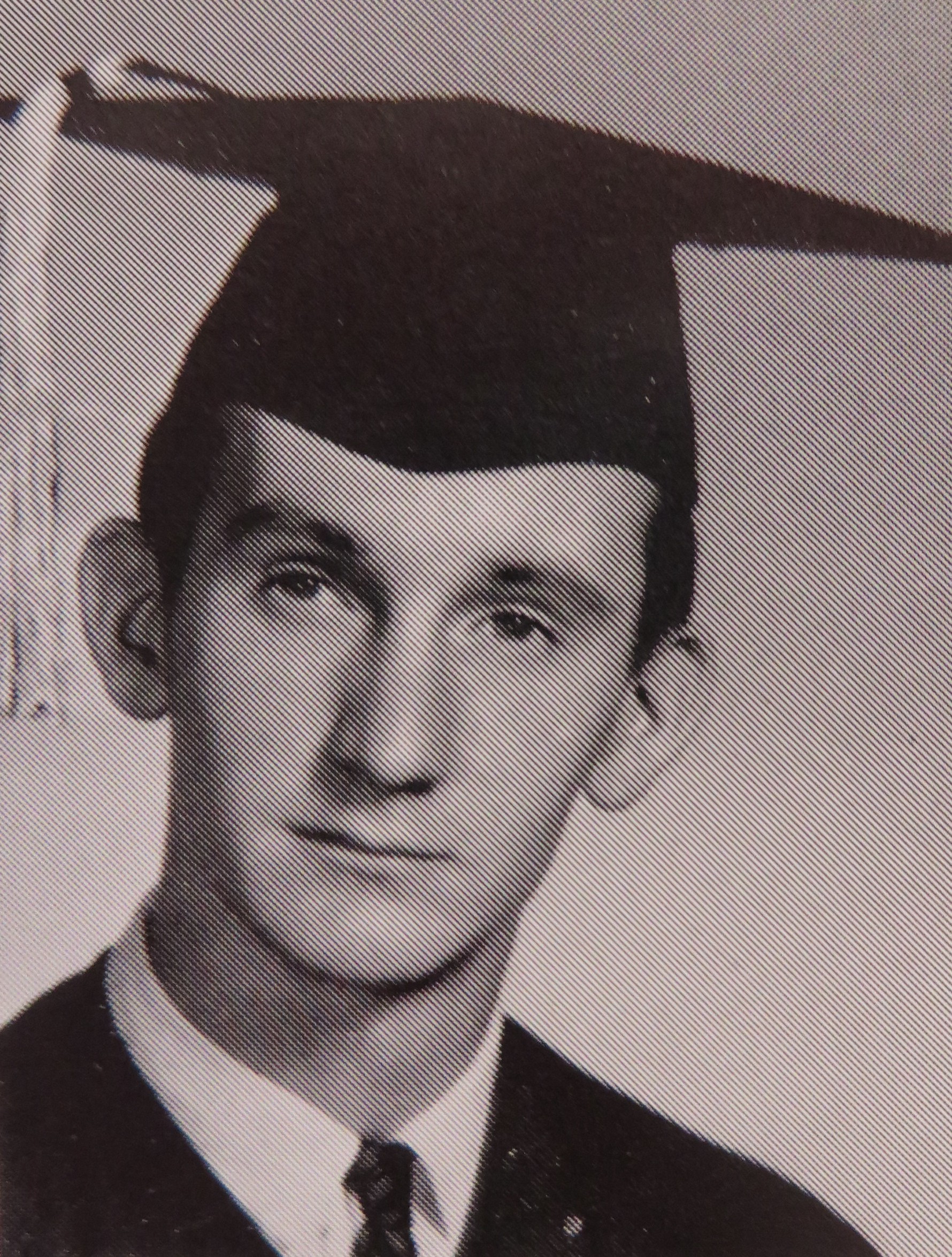
Dennis “Wayne” – Class of ’64.
On the subject of nomenclature, as dinner table conversation I’ve been guilty of telling tall tales, such as only two middle names are legal in Texas City, Jo for girls (Becky Jo) and Wayne for boys (Dennis Wayne). I’ve explained (more or less) why Rita was called Rati and Terry Fales was called Ferry Tales. There’s also Armelia (not Amelia), and Danise (not Denise). There’s Archibald called A-Ball and Dorothy Lee called D-Lee. We had Weymond (not Raymond) and Emken Linton, the student, and Emken-Linton, the funeral home. People love this stuff.
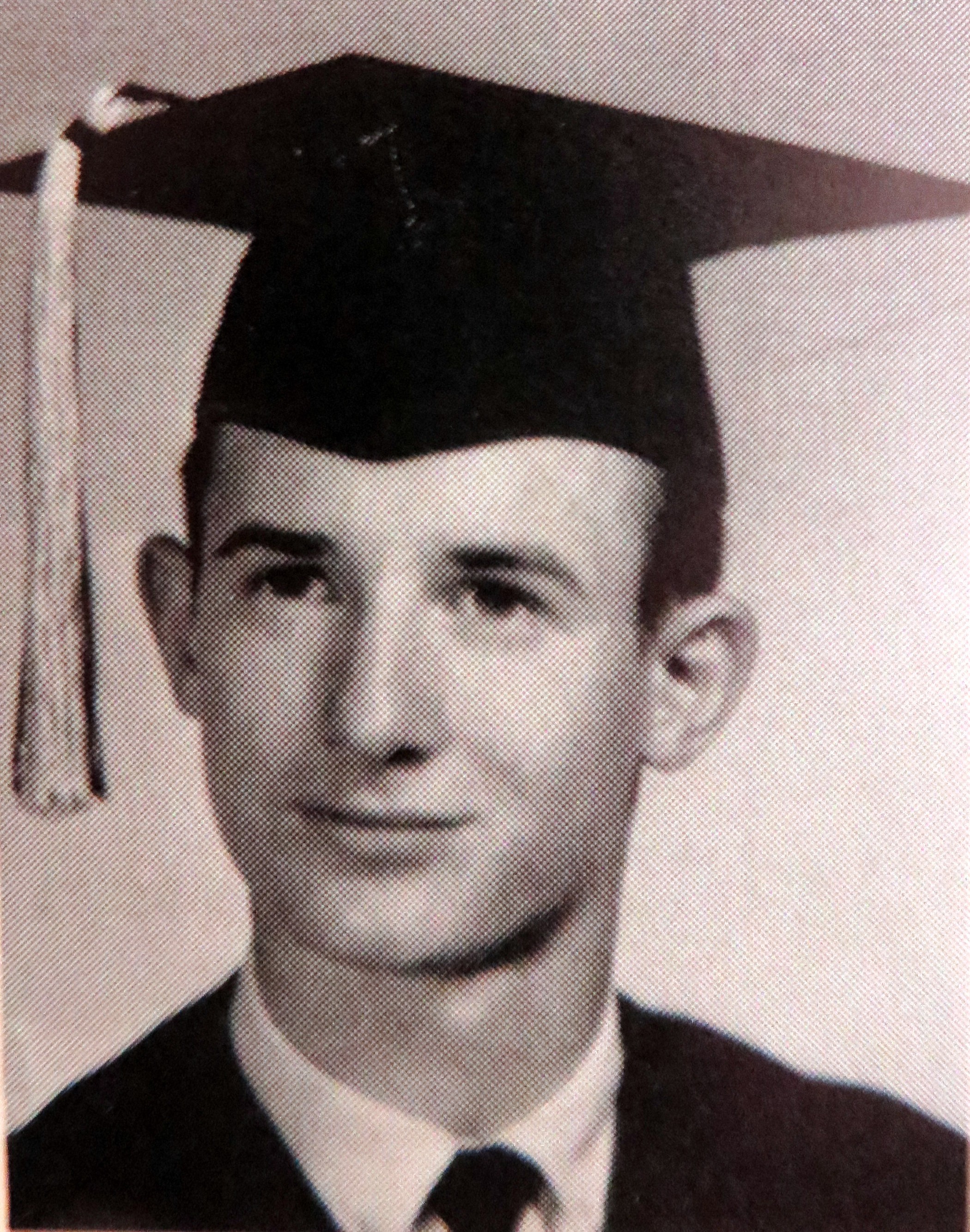
Terry “Ferry Tales” – Class of ’64.
I’ve explained Texas City football and Tackle Time, and that the two have nothing to do with each other. When people see pictures from my class reunions, I explain that, no, it wasn’t Halloween. Then there’s the Texas City Dike. Texas Citians over the age of 13 rarely think about the double meaning, but others do. The funniest remark to date came from an openly gay colleague at work.
“The Texas City Dyke? Is that an elected position? I’ve always wanted to run for office!”
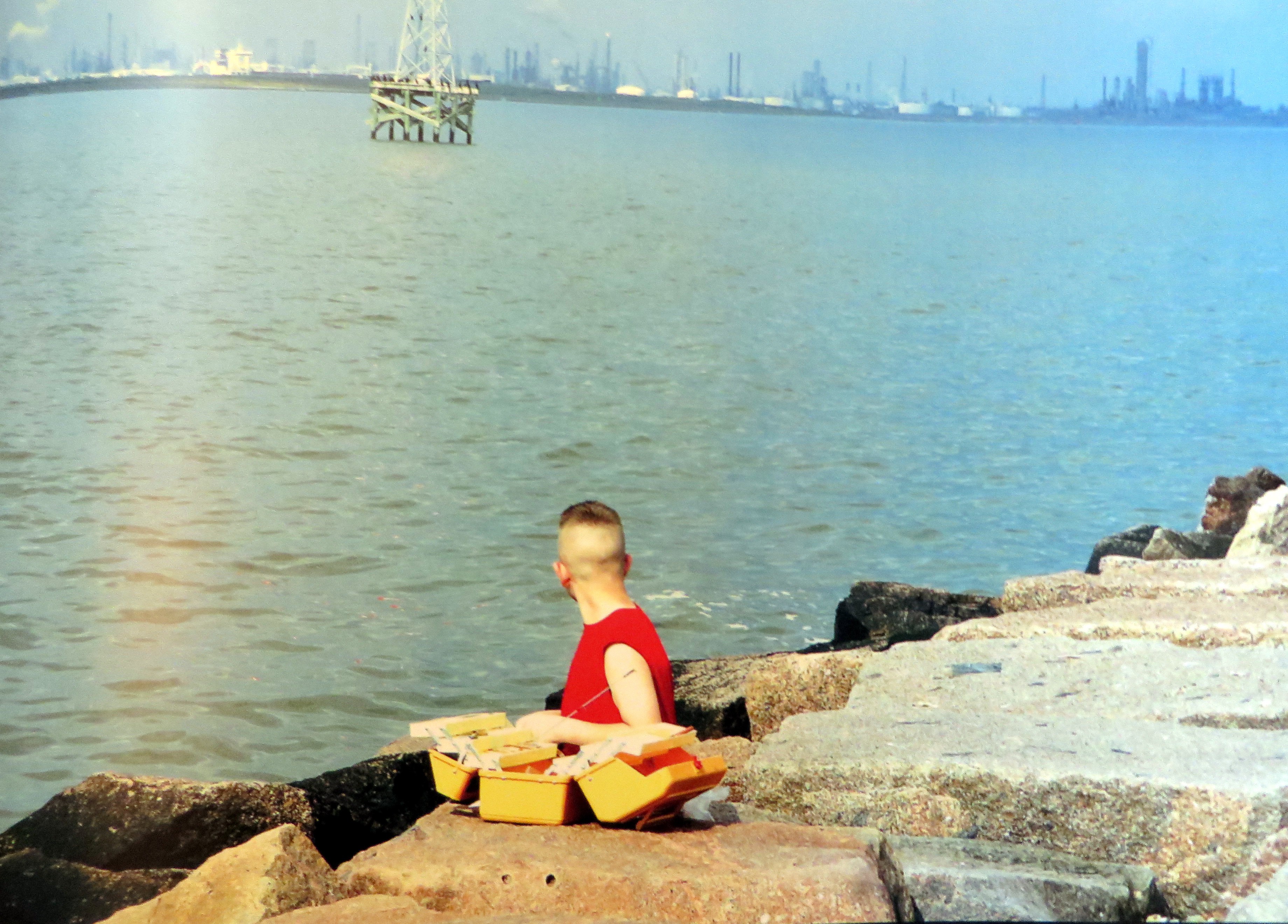
The TC Dike always looks the same.
This is quirky small-town-in-Texas stuff, and fun, but none of it explains the loyalty many of us feel for TC, and after the Battle of the Texas City Chicken, I pondered: What made Texas City different?
It came to me at the Pentagon in 2003, in the Humanitarian Relief Corridor in the A Ring, which depicts places around the world where the U.S. Military has assisted the civilian population. Right up there with the Berlin Airlift, as a part of the permanent exhibit, was a black-and-white photograph of Texas City in flames. And there it was. That’s what’s different about Texas City.
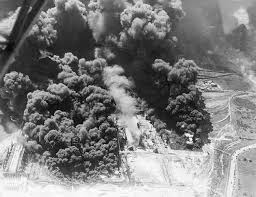
Texas City, April 16, 1947.
Before 9/11, no other American city experienced a One Day War. On April 16, 1947, the port of Texas City suffered the greatest loss of life in an industrial accident that ever happened in the U.S., before or since. The SS Grandcamp exploded, followed by the SS High Flyer. The cargo: some five million pounds of ammonium nitrate, the combustible material in bombs. This became known as the Texas City Disaster.
The impact of 9/11 compares to nothing else, and yet, comparisons are interesting. The population of Manhattan on that day was 1.6 million, and 2,606 people died at the World Trade Center. That’s .16 percent (point 16 percent). The population of Texas City in 1947 was 15,000, and 600 people died. That’s four percent. For the percentage of people who died in Manhattan to equal the percentage of people who died in the Disaster, the number would have to be 64,000 citizens.
On 9/11, 343 firemen lost their lives when the towers fell. In TC, the number was much smaller (27), but the entire volunteer fire department ceased to exist. NYC had a hero mayor in Rudy Giuliani. TC had a hero mayor in Curtis Trahan.
In a town the size of Texas City, the injured and dead were loved ones, friends, neighbors, and the paperboy who biked to the docks to see what was happening. The Class of ’64 thought of the Disaster as history, yet to the survivors – our parents – it would have seemed like yesterday. Consider that 9/11 happened 14 years ago, and there are young people born after 2005 (give or take) who don’t remember that singular day in 2001 in New York, Washington DC, and Pennsylvania.
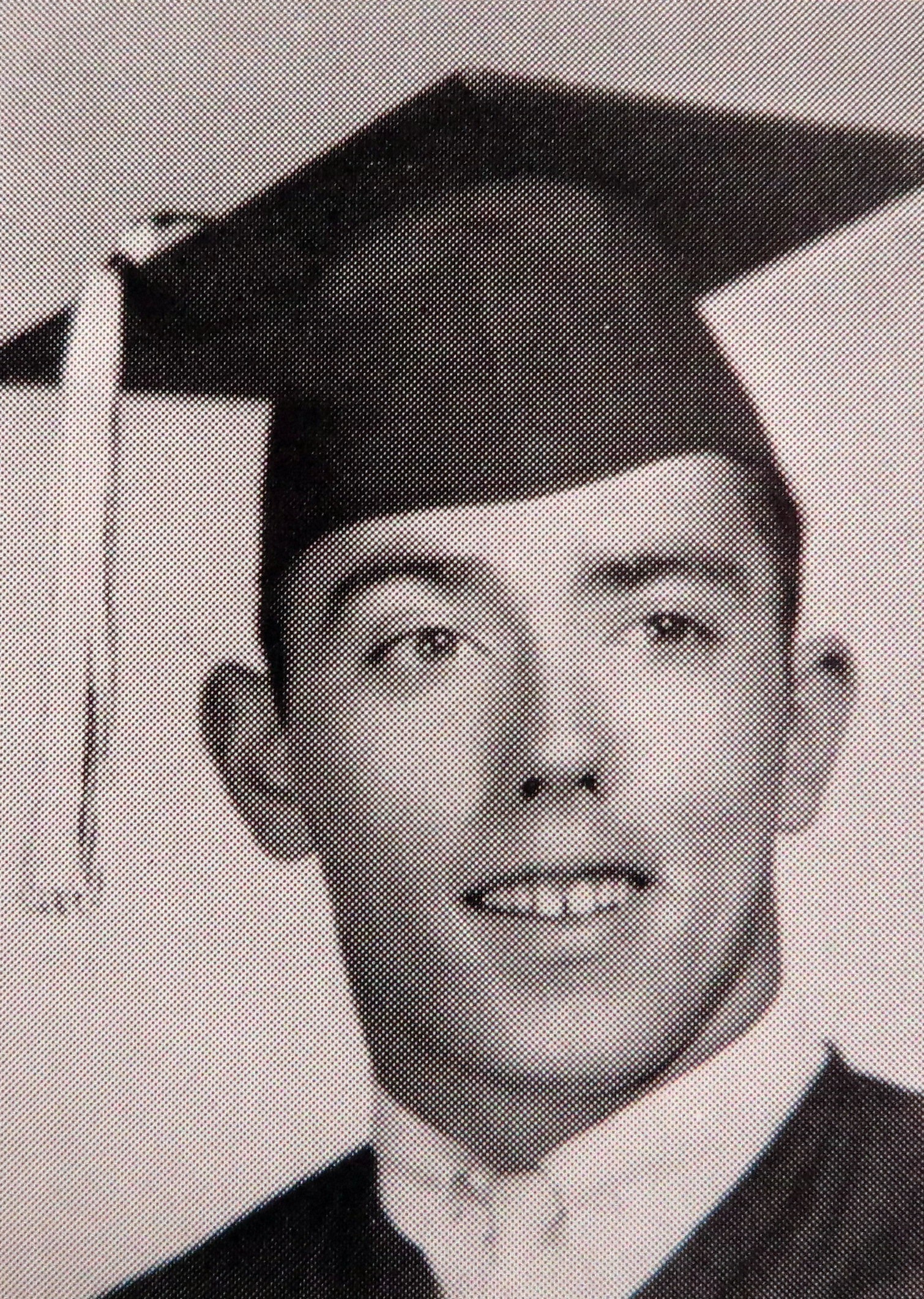
Jim Jr, Class of ’64, son of Police Officer Bell.
And it was a One Day War, with the full arc of that most awful of human disasters. The day was perfect, sunny and mild, but something was going on down at the docks. At 9:00 am Officer Bell of the Texas City police department said that as far as he knew – as far as anyone knew – everything was under control. Fire fighters were on the scene, and no one expected an explosion. At 9:12 the world according to Texas City blew to bits.
Over 600 people died. Thousands were injured. The streets looked like news footage of European refuges wandering through rubble, like something from the front lines of World War II. Veterans of Pearl Harbor said it was like December 7, 1941, when warships buckled trying to ride out the chaos. It was worse than the buzz bombs at the Battle of the Bulge.

Carolyn, who became a nurse.
Our classmate, Carolyn, lost her father in the Disaster. She became a nurse because the men who knew her dad created a fund for her education. Our classmate, Ricky, also lost his dad.
What follows is a first-person account of that day from my cousin, Ray Morris, who was in third grade at Danforth Elementary.
I remember seeing a huge, black cloud of smoke with flames at the base. I thought the Japanese had bombed us again. We were taking a spelling test when we heard a loud explosion. We looked at the windows where the sound had come from, and then the glass shattered, cutting all of my fellow students to some degree. The students close to the windows were cut the worst. I had a little cut on my ear and on my eyebrow.

My cousin Ray, about the time of the Disaster.
We filed out like we were having a fire drill, the teacher saying “don’t run.” I still had my pencil in my hand, and I thought, I don’t need this. I dropped it. We ended up in the playground, in a daze and sobbing. Mom found me and gave me a big hug in relief. She said “if we find your dad alive, we are getting out of this crazy town and never coming back.” I remember the large amount of debris on Sixth Street as we headed home. We were living in Snug Harbor. Yet, even that far from the explosion all of the nail heads were exposed in the walls. We headed for the little airport to spend the night.
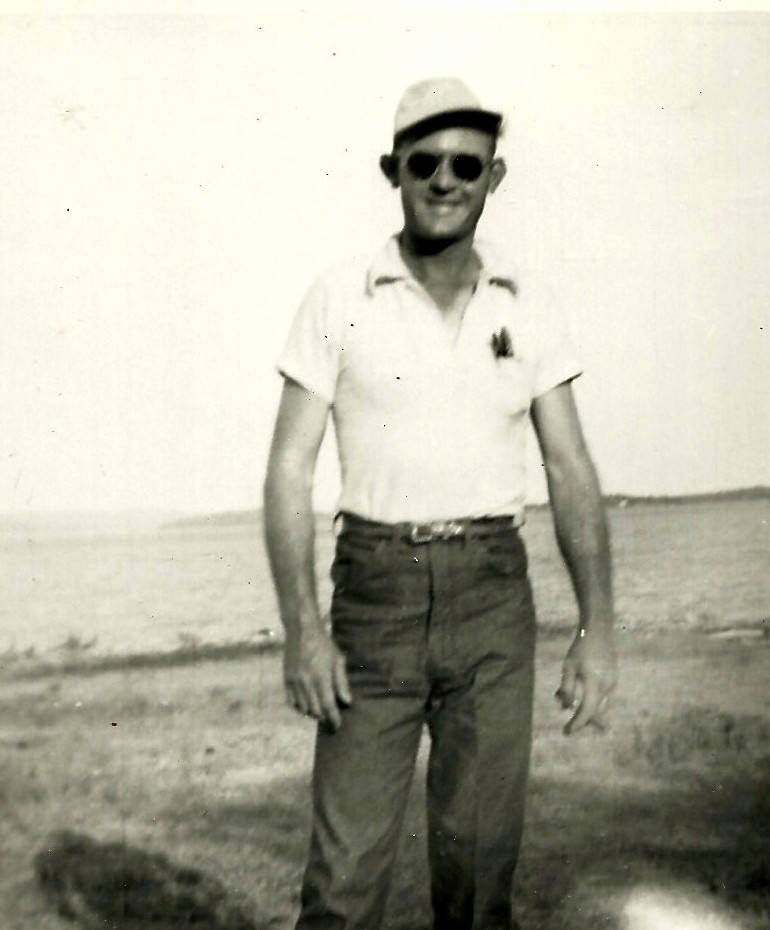
My Uncle Raymond Morris who became an air traffic controller the day after the Disaster.
There was shock, death, injuries, and destruction, followed by uncertainty. Who was alive? What friends and neighbors were gone without warning? And then human beings did the best they could to cope with the aftermath. All in one day.
My cousin’s home five miles away was unsafe, so his family stayed with the Donahues, owners of a municipal airport, not much more than a couple of dirt runways. The next day my Uncle Raymond, an ordinary citizen, became an air traffic controller. He stood in the middle of a muddy field directing airplane traffic as the National Guard and Red Cross all tried to land at the same time.
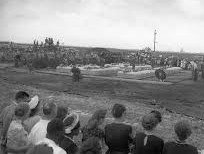
Memorial service for all the citizens who died.
The people of TC experienced extremes of grief, post traumatic stress, and then the process of healing. Even the fact that there was no way to tell black body parts from white body parts had an impact. Amid the overwhelming tragedy, people wondered what difference it could possibly make, and they were all buried together. The memorial service for the dead was open to all races, and this was remarkable in Texas in 1947.
Social change is a lengthy process, but once people allow themselves to think even for a minute that skin color might not matter, the hard resistance becomes softer, more penetrable, and in 1963, when African Americans integrated Texas City High School, there was barely a shrug.
The Disaster had an incalculable effect on the citizens of Texas City. Our parents survived a war, and they were never the same. Friends noticed something about Mayor Trahan after the WW II, and I think it applies to TC after the Disaster.
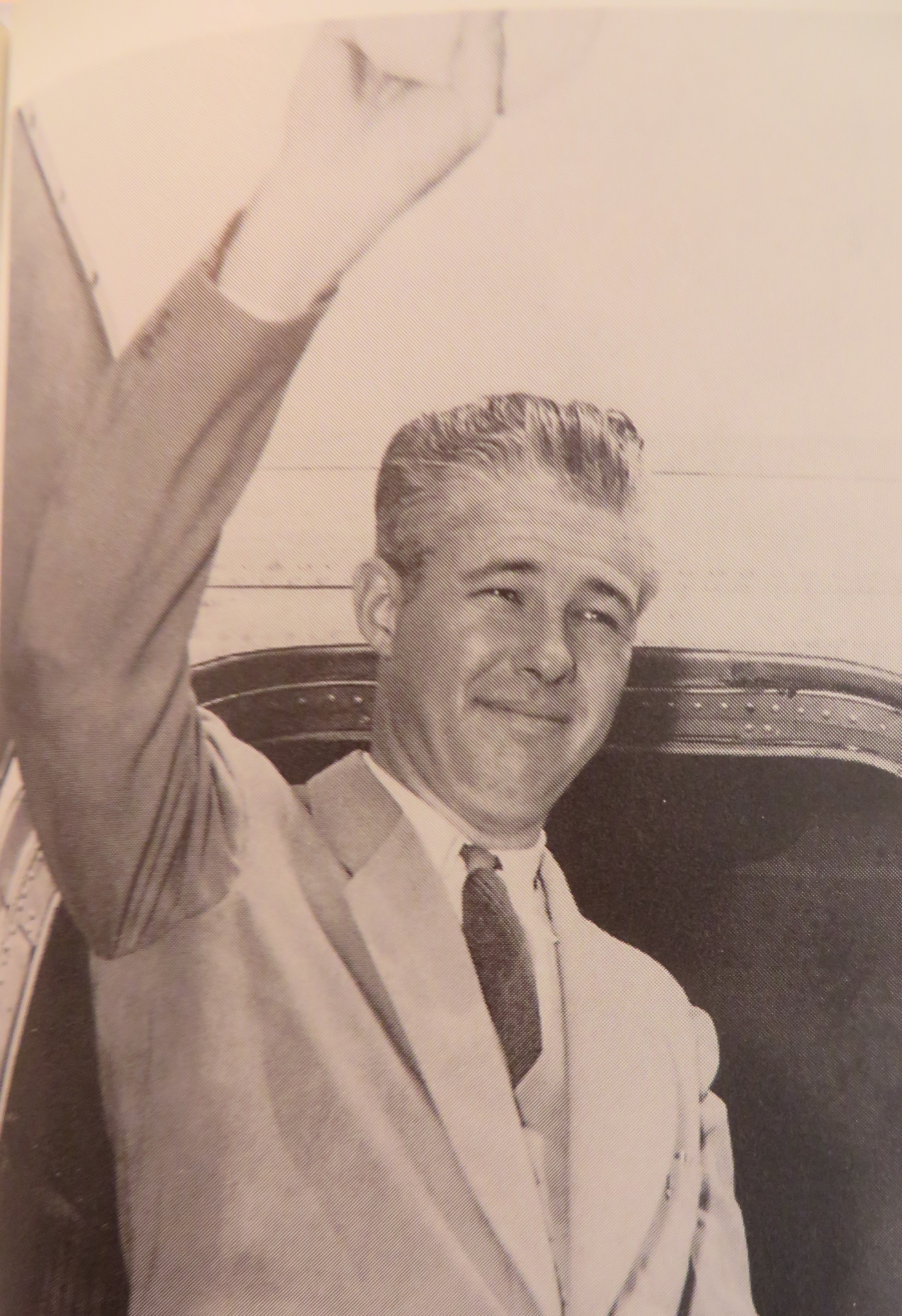
Mayor Curtis Trayhan (from “City on Fire,” by Bill Minutaglio).
It was the same thing that they had seen in other men who had come back after surviving something immensely cruel, elemental, and furious. His sense of ease was now almost wholesale. His volcanic tendencies were gone. Curtis Trahan was a steady man. He had the glow of a good man who really had denied death its dominion. (From “City on Fire.”)
Texas City didn’t become paradise. It had its share of pettiness, nosiness, bigotry and narrow-mindedness, but the One Day War changed the temperament of the town. Europeans in the 20th century understand war. When it’s all over, they will say folks become gentler, more patient. They know life is fragile. They hold tight to what matters and let unimportant things go. They love their children better. I don’t know how long it takes for the memory to become abstract and the post-war effect to dribble away. Maybe only a generation, but long enough for the children of the survivors to grow up in an environment of kindness that engenders loyalty to their home town.
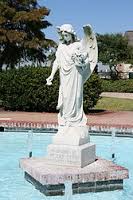
Texas City Memorial to the men, women, and children who died in the Disaster.
Now, when I’m asked where I grew up, I go directly to the Texas City Disaster. People are astonished to learn that in 1947 in a small Texas town 600 people were killed, and 2,000 were injured. Neighborhoods were flattened, and school children wandered among the body parts on Sixth Street. A major industrial plant nearly vanished. Just as 9/11 changed everything, April 16, 1947, changed everything in Texas City.
I think that’s why, at a dinner party in 1985, I ignored personal insults and a snotty attitude about Texas, yet I couldn’t let Texas City go undefended. I know why I would do it again. I owe that much to the generation who cared enough to call our mothers when we stepped out of line, the generation who survived the One Day War, the generation who understood what matters, and understood how quickly what matters can be lost.
NEXT: Dating, Butterfly Style
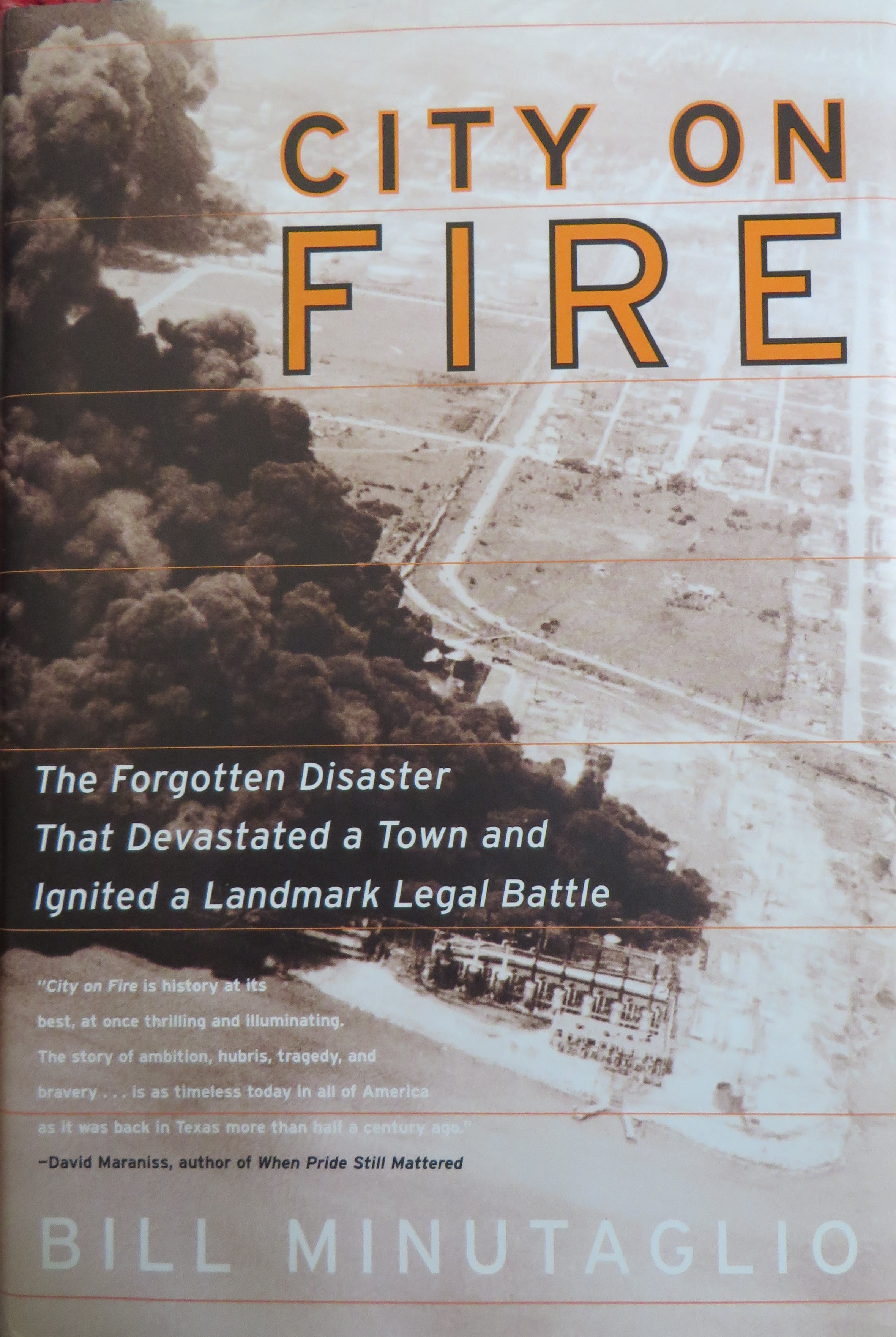 Author’s Note: Certain information in Bill Minutaglio’s book, City on Fire, was helpful in writing this piece. For any of you who might be interested, it’s available at Amazon.
 Tuesday in Texas
Once again very interesting reading. Even though I didn’t become Texas Citian until I was 4, the Texas City Disaster was part of all our lives, and the way Texas City came together to comfort those who lost husbands, wives and children and rebuilt the City is a wonder. The pride we all have for our City lives on in all our lives. Texas City was and is a small town with a very big heart. Thanks Becky for standing up for our City. What a wonderful tribute.
LikeLike
Thanks, old friend. I was surprised how people were raving about the whole “incident” by the time we went for dessert. Now, if I had actually PUT Tipsy’s face in the chowder . . . Who knows. I just might have. Love you as always, and I’m glad you like my blog! xxoo
LikeLike
Ours was one of those many families in the thick of the events of April 16, 1947. Uncle Joe (Sharon Luhning Meyers Bates’ father) had called home and asked if someone could bring his camera so he could snap some pics for Monsanto’s internal publication. Our grandfather drove Mother down to the dock, and she took to camera to Uncle Joe. They chatted a few minutes until Uncle Joe told her to run on home, that that was not a safe place for her. As she was making her way back to our grandfather’s car, she felt the implosion and then the explosion. All chaos broke loose after that. Mother survived with unbelievably minor injuries. Uncle Joe didn’t. Sharon’s daddy went to work that morning and never came home.
I’m living back in Texas City now, and I watch all the changes that make it look nothing like the city where I grew up. Sometimes it’s hard to picture what the city looked like back then, but your blog has helped me locate some memories deep in the folds of the old gray matter. Thank you for that. But beyond that, it transports me ever so briefly to the essence of the personality of the city and to the innocence of the era. If I had it to do all over again, I’d choose the exact same place and the exact same time for my upbringing.
I’ve always been perhaps a bit overly proud of my city of origin. I think you’ve helped to add some perspective as to why. I love reading the comments of the others who knew how special our place and time were. Since I’m not on any social media, I’m not able to keep up with these people, but I’m delighted to see their names and remarks when your weekly installments are posted.
BTW, your snappy comeback about Texas Avenue was just priceless! Apparently, little Miss Tipsy didn’t understand that one doesn’t mess with Texas … City!
One more thing. The burial spot for the 63 unidentified bodies is a lovely park these days (Memorial Park). I’m there several days a week walking my dogs. It’s a gem, both as a place to walk and as a place to stay connected to the event that changed my family and my city. Every April 16, I take two carnations and place them at the two places where Uncle Joe’s name is engraved in the list of lives lost. If anyone ever gets back to TC for a visit, it’s worth a little extra time to swing by the park. My dogs and I would love to see y’all!
LikeLike
Thanks, Donna, for taking the time to write this. So many people have stories from that day, but growing up we didn’t talk about it much. I guess we were typical of kids that age — it seemed like something that happened a long time ago, and had nothing to do with us. It took me a long time to understand and articulate why it had everything to do with us. I’m sorry to say I’ve never been to that park, but next time I’m in TC, I most certainly will go there. Also, I love dogs, so maybe I’ll give you a call, and we’ll meet there. Thanks again for telling me about your uncle, and the experience of your family.
LikeLike
Another awesome read and thanks for not letting us down–way to go girl!!!! Two snaps up!!! only thing better would have been if you would have actually done it!!!! Carolyn Stork’s father was also killed in the explosion and she will quickly tell you she is a nurse today because the men who worked with him created a fund for her college education.. Very sad time but it definitely made a city that embraced us and made us all know this was our home–no matter how far we went or how long we stay gone. I too am back in Texas City yes it has changed MUCH–but it is my hometown and Tipsy better not utter a word against!!! U can take the girl out of Texas City but not the Texas City out of the girl!!! Way to go!!!
LikeLike
I knew there must be other classmates besides Ricky who lost a parent in the Disaster, but I didn’t know who. I’m glad to know about Carolyn. How heart warming that she became something so worthwhile in life — it’s a tribute to her father. Brian says he was so sure I was going to go right over the table, that he was glad for the diversion of the chicken hitting the floor! I’m always glad to hear from you — and all our classmates! Thanks for your support, and thanks for sharing the posts. xxoo Bec
LikeLike
How many of us had two maiden names by the time we were 4-1/2 years old. I’m thinking way more than I used to know. Of course, Donna’s Uncle Joe was my dad. I was not quite 3 on 4-16-47 and barely remember him. Such a traumatic time. Mother was only a week or so pregnant with my sister Joey Luhning Meyers Hodgin. Mother was blasted out of the steno pool room into the hallway at Amoco. I was always amazed that Joey survived that. We could have lost so much more that day. In addition to Donna’s mother surviving (a miracle considering her close proximity to the blast), our grandfather narrowly missed being killed as well. He had been sitting in the car waiting for my aunt. He was concerned because it was taking her so long to return, so he stepped out of the car. At that time the ship blew and a huge piece of shrapnel impaled the car where he had been sitting. Donna was a wee baby sleeping in a crib at our Grandmother Luhning’s and for some reason my coat was hanging on a nail over the crib. When the explosion happened, the coat was knocked off the wall and landed on Donna. The window shattered and glass landed on top of the coat. Donna ended up with a little cut on her forehead. Yes, we suffered loss and our lives were radically changed. I remember as a kid thinking our situation was so odd because family members would begin introductions that way when we met someone new. Once Mrs. Mabry and many others put the book “We Were There” together after the 50th anniversary of the explosion, I found out our situation was pretty common. The memories in that book are so heart wrenching and it’s very difficult to read.
Becky, thank you so much for this. I personally loved your reaction to Tipsy. Obviously lesson learned for her!!! Look at that pic of you in ’85!!! Old Tipsy was just jealous because you’re such a smokin’ hot chick!!
LikeLike
Wow. What a story! Thanks for telling me. I’m loving these first person accounts. I only just learned about the book that was put together, and I would sure like to find a copy. I went on Amazon, but it must either be out of print or some kind of limited edition. There were two copies available, one for $100, hardbound, and another for $70+ (binding unknown). Al Mitchell told me about it, so maybe I’ll check libraries around town. I gotta tell you, I like your explanation for Tipsy’s attitude way better than she was just drunk! I looked pretty good in ’85 (we were all still young – that helps, ha ha), but not good enough to get a stranger mad at me. However, in the future, I’m going to think I was that dazzling, just to make myself feel good, ha ha!
LikeLike
You might try the museum in the old Penney’s building on 6th. They might have some copies. Just a thought. We ordered them after the 50th anniversary. Hard to believe we’re right on the heels of the 70th.
LikeLike
Thanks, Sharon. I’m pretty sure it’s out of print, but I’m going to look around. You never know.
LikeLike
My heart is bursting with pride for the way you have stood up for Texas City and for all of us. My Aunt’s 1st husband was killed and was in the ‘pile’ of bodies being guarded when the guard saw him move his hand. They pulled him out and tried to save him, but he was too badly hurt. I just recently gave a wallet that my dad had of his to my cousin. Her mom was married to him at that time. It was a bittersweet moment. Kent’s grandfather also lost his life that day. Thank you for standing tall and being proud!
Paula Warren Atwood
LikeLike
Thanks for writing, Paula, and thanks for telling me about the losses in your family. It makes me feel closer to my home town, and closer to old friends. That’s something about your aunt’s husband — so sad he couldn’t be saved. Great to hear from you, and give my best to Kent. Bec
LikeLike
Becky, you’ve brought back lots of memories of all the explosion stories I heard growing up. This was our small family’s story, told to me…I was a 4 month old infant, in the car with my mother, father, and grandmother. We had driven to the levee, when the ships were burning, to try and locate my grandfather, who worked in one of the Monsanto buildings, and get him out of there. After getting out of the car to survey the situation, Daddy came running back to the car, and we tried to leave quickly, but not before it all blew up. I ended up with a bleeding cut on my head from debris through the car window, and we had to race to Pasadena, in order to find an available doctor for treatment. All other doctors in the area had raced to the disaster site, with all the ambulances. We had to stay with relatives there, because our little house on 16th Ave. was so damaged. We had no idea if “PaPa” was dead or alive for four days, after his building collapsed that day. Someone just happened to hear his name on the radio, as one of the injured, who had been taken to a hospital in Houston. He survived, but was never able to work again, due to his injuries. Our family was very lucky on that infamous day. I’m almost embarrassed to share my story, because it was NOTHING, compared to hundreds of other more tragic ones. Thank you for the venue.
Love you,
Dolores
Note: I would have helped you slam Tipsy’s face into the chowder…or at least pored MY bowl on the back of her head…or down the front of her party dress! (That all would have legally been “assault”, right?) What the hell. So worth it!
LikeLike
I don’t think you have a thing to apologize for! After all, you were among the injured, even if you don’t remember it, poor little thing. It’s pretty amazing that it wasn’t worse, really. My own personal story is REALLY lame, so lame I didn’t include it. I’m sure I don’t remember it, though it’s one of those things that it feels like you remember, because you heard about it a few times. We were living elsewhere (San Antonio, I think), and when TC blew up, my mother tried to get in touch with her big sister Jackie Morris, mother of Ray Morris (whose story I did put in the blog). My mother couldn’t reach Jackie for days and days, and became convinced she had been killed, or at least my Uncle Raymond had been killed, since she knew he worked in one of the plants. She didn’t know which one. Finally, Aunt Jackie managed to call my mother to report their family escaped unscathed, except for Ray’s minor cuts.
I think it’s best you weren’t at that dinner party. You wouldn’t even have warned Tipsy. You would just have done it, ha ha. She had it coming, and I’ll be she thought about it twice before she trashed anyone else’s home town, ever again! Yeah. As Judy put it, don’t mess with Texas . . . City! xxoio
LikeLike
thank you ,Becky, I hope to put you up for texas city association award, txs, Ronnie Palmer
LikeLike
You’re welcome, but the TC association award? Me? That’s so nice, and I’m so flattered, but for what?
LikeLike
You are a spectacular writer, Becky. Thank you for giving me a new appreciation for our home town. My cousin Donna Spurlock Falco introduced me to your blog tonight and I have been unable to stop reading. As the Joey in my sister’s post above, I may be the youngest survivor of the explosion, and you and I are neighbors of a sort, here in Northern Virginia. I’d love to meet you. Our other connection is that my stepfather was your Blocker band director, and if all you got for your clarinet disaster was an eye roll, you were a lucky kid. Also, my grandmother Samar Winesett worked in the Blocker office with Mrs. Benskin.
LikeLike
Wow — small world. I live in a suburb called Mantua, between Hwy 50 and 236. Where do you live? Do you remember Jinx Springfield? He lives in the area. Ronald Dickey used to, but he moved back to Texas after he retired. I remember Mrs. Winesett a little, but when I was at Blocker, when I went to the office for anything, I always went to see my Aunt Venita (Benskin). I’m so happy you like my blog, and yes, it would be fun to get together some time. Let’s work on that!
LikeLike
I’m in Annandale, just inside the BElway very near you. We should definitely meet!
LikeLike