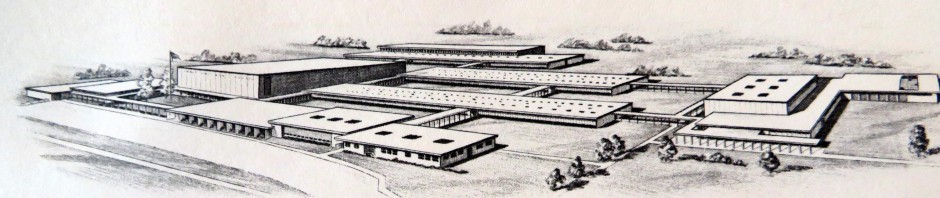
Author’s Note: Some years ago I had the following story published in The Concho River Review. The protagonist, Roy, is based on someone I once knew. The teachers . . . well, I think you may recognize one or two.
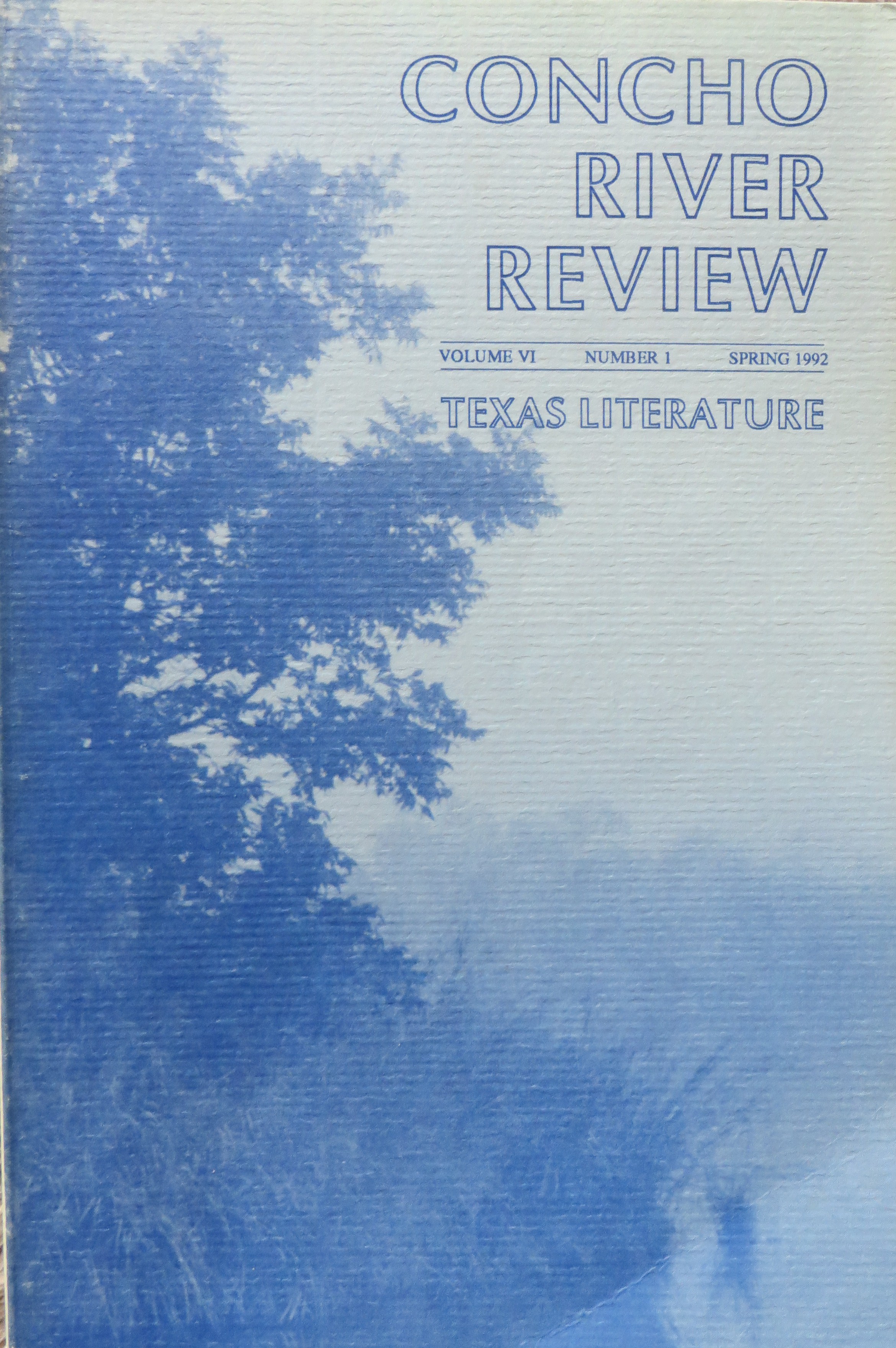 The Only School in Texas That Teaches the Tango
Many years ago, when my mother left my father for the seventh and final time, we had to hide out for a while. That’s how we ended up in Brindel’s Mill, a Texas town that’s blessed with nothing, not far from Odessa. It seemed ideal.
On my first day at Brindel’s Mill High, the registrar told me with a disapproving shake of his head that the principal insisted on meeting all new students. “Just go on in. Her office is right down there.”
I stood outside the slightly open door. A stenciled sign said: Mrs. Leah Newcomb (Spencer), Principal. In Texas in 1959, I had never heard of a female high school principal, and I couldn’t imagine what she would be like.
She sat tapping her pencil against her desk when I entered, a worried expression on her face. She resembled a ripe pineapple. Her round torso bulged inside a brown knit sweater, and from the top of her head sprouted a short pineapple-leaf ponytail caught with a green rubber band. I knocked timidly on the door frame.
Her face sprang into a grin. “Ah! A new student! And handsome, too! This week of struggle and bureaucracy is redeemed! Come in and delight me, young man!”
I had attended schools all over Texas, and I had never received such a welcome. The pain of being the new kid would be there, but this rotund woman with the funny hair gave me hope. As in Wonderland, things got curiouser and curiouser.
She asked me questions and listened to the answers, leaving me completely nonplussed. When she extracted more from me than my own father ever had, she gave me some information of her own.
“I take pride in Brindel’s Mill,” she said. “Oh, I know it’s just a wet spot in the road, but it’s our wet spot, and in its own way, it reflects the vagaries of humankind. For instance, there’s never been a mill here, nor anyone named Brindel. There’s no such family, railroad, cattle breed, or river.”
She leaned back in her chair and placed her tiny feet on the desk. I tried not to stare, but they were about the size of piano keys. How could she walk on them, I wondered?
“A drifter named Tom Sams founded the town, and two days later he left. In eighteen-something, I forget, the mayor and the town council got into it over buggy traffic on Main Street. The council wanted to put up a sign saying ‘Stop Before Continuing,’ but the mayor thought the sign should just say ‘Stop.’ He reckoned people would know it didn’t mean forever. They exchanged insults until the mayor ended the debate by drawing a pistol and shooting himself in the foot.”
She paused, clearly expecting some comment from me. I had been half listening, distracted by the sight of a female principal with her feet on the desk who listened to students and didn’t even care about exact dates. “Uh,” I said. “Uh, hmmm, well . . .by golly! If that sign had gone up, it might have been the first stop sign in Texas!”
 This pleased her. “Indeed it might have! But it never did, owing to events. Namely, the mayor declared the town and the council defunct, and except for the people, the stores, and so on, Brindel’s Mill didn’t exist for years. When folks wanted electricity and paved roads, the school teacher, a Mr. Spring, sent ballots home with his students, asking for re-establishment of the township and the election of himself as mayor.”
I nodded as though I understood the politics of this, which I did not.
She returned my sagacious nod, rose from the desk, and started toward the door. I followed.
“When Brindel’s Mill needed a bigger school with separate grades,” she continued, “Mayor Spring appointed his sister, Iris Spring Newcomb, as principal of the high school, and a Newcomb’s been principal ever since! And we’re always called ‘Newcomb,’ even if we’re married.”
By this time she was rolling down the hall at my side, escorting me to my new homeroom. I studied the way her solid stoutness tapered to the tiny but functional feet, and I decided she was more like an ice cream cone than a pineapple.
As we entered the classroom, she said, “Sometimes nepotism means stagnation, boy, but it can work the other way. Sometimes a family lock is so cemented by tradition a remarkable person gets the job, and there’s nothing the school board can do about it! I am such a person!”
She laughed, and so did I, so that my appearance to my new classmates was one of relaxed good humor. With the excruciating self-awareness of a fifteen-year-old, I realized this would be a good first impression.
Introducing me to the class, Mrs. Newcomb included my middle name. Roy Clephane Harrington. I was pimply, embarrassed by my very existence, and inclined to get an erection at anything from a meatloaf to a trophy case. I blushed but didn’t get an erection (it could have gone either way).
When the snickers came, Mrs. Newcomb poised on her miniature feet (I thought she might pitch forward) and silenced the class by threatening to remove her shoes. I learned later she had a chronic and pungent foot fungus, known by all as “Newcomb’s Nukem.”
By the end of my first week, I also learned she had two requirements for those who wished to teach at Brindel’s Mill High. The first was a sense of humor; the second, intelligence. If the candidate couldn’t make her laugh, they didn’t get the job. She had her own intelligence tests, too.
The biology teacher, Mr. Chandler, got his job because of his arm. It had a severed nerve or a pinched something. Rumor said it happened in the war, or maybe a motorcycle accident in Spain or Alabama. Without warning, his left arm would slither away from his side and jerk like a worried snake. The arm had its own private fit while Mr. Chandler watched. He got it under control by slamming his hand against a flat surface, like a wall or a table, locking the elbow and leaning his weight on the arm. This occurred regularly in class, and although it was startling the first time you saw it, especially if he slammed his hand down on your desk, it was just part of old man Chandler.
In his interview with Mrs. Newcomb, it was said, the arm snapped out and smacked her on the chin. She laughed like the devil. Then she pulled a rubber chicken out of her bottom desk drawer and made him teach her the muscle groups from stem to stern. He did, using a combination of first initials to help her remember.
She asked potential band directors to compose eight bars of a march and disqualified them if she couldn’t play it on her cornet, reasoning that it was too hard for high school musicians. For days the halting sounds of her horn filtered into lab and classroom, but on the day we heard a pithy but simple march, well-played by Mrs. Newcomb, we knew we had a new band director.
She made the math candidate balance her checkbook, a task that defeated ten in a row and resulted in the hiring of Mrs. McIntyre, whose approach to algebra included histrionics and prayer. She pulled at her hair, made us work at the board while everyone watched, and screamed about keeping “your equals under your equals.” When so moved, Mrs. McIntyre dropped to her knees and beseeched the Almighty for assistance. Every second we were in his class she had our uncompromised attention.
Mrs. Newcomb looked favorably on me for several reasons. Number one, she considered me an object demanding tenderness, “a fatherless boy.” She also thought I had an original mind, the supreme accolade. Once Mrs. Newcomb pronounced that a student had an original mind, their academic reputation was established.
I ran track and warmed the bench at basketball games, which demonstrated school spirit to Mrs. Newcomb. In the case of basketball, it was for a superior view of the enchanting flip of Ginnie Newcomb Spencer’s long, honey-colored page boy, not to mention the maddening flip of her maroon cheerleading skirt. Ginnie was Mrs. Newcomb’s daughter, the baby, last of four children.
Mrs. Newcomb’s favor allowed me the privilege of working in the office one hour per week, removing me from study hall. I performed my duties with one ear cocked toward the open door of her office, which was the heart of the school, not to mention the home of her legendary bottom desk drawer. It contained not only the rubber chicken, but such known treasures as the pea shooter that got Butch Roberts suspended and the beret worn by Trish Olaganski, the school-slut-who-really-wasn’t-but-every-school-has-to-have-one. The beret, being French, was automatically decadent and immoral. A teacher snatched the offending chapeau, deposited it on Mrs. Newcomb’s desk, and it found its way into the bottom drawer.
Mrs. Newcomb chose her battles, and there were many. She didn’t take up the lance for hats, but I remember once I passed her office after basketball practice. She sat alone, working late, and on her head was the jaunty red beret.
What led to trouble for me was Eddie Redmond’s tennis shoe. Eddie was a football star, big, obnoxious, smelly, the banker’s son. Once Mr. Chandler hit him accidentally with his wild arm, right after Eddie dipped Little Andy’s lunch into formaldehyde. Although Eddie’s dad pitched a fit about it, Mrs. Newcomb prevailed. Mr. Chandler kept his job.
Eddie’s tennis shoe came to rest in Mrs. Newcomb’s bottom drawer because of Ginnie Newcomb Spencer. Eddie sat behind her in Mr. Jay’s history class. (Mr. Jay, known as the Cyclops, had a glass eye, but that was small potatoes at Brindel’s Mill High.) Eddie habitually put his feet on the back of Ginnie’s seat, and thus onto her crisp starched skirts. I longed to defend her, but I weighed 150 pounds, Eddie weighed 210, and I didn’t want to die. Soon enough, Ginnie proved herself a true daughter of the family Newcomb.
Opportunity came Ginnie’s way one spring day when Eddie, overcome by balmy weather, fell asleep with his massive feet on either side of her chair. With her black ballpoint pen she printed “SCREW MRS. NEWCOMB” in letters an inch high on the side of Eddie’s Moby Dick tennis shoe.
She had to lean away from her desk to get at the outside length of the sneaker, but she managed. When I got over my shock at sweet Ginnie’s cunning, I realized with glee that Eddie was done for. Sure enough, Mrs. Newcomb saw the epithet before Eddie did, and she confiscated the shoe. She instructed Eddie to remove one shoe every day when he arrived at school, and walk around like that for a whole month. He was free to complain to his father, but she would then be forced to show Banker Redmond the missing shoe. Eddie became known as “One Shoe,” and once he figured it out (he was slow), he never put his feet on Ginnie’s chair again.
Desire to possess The Shoe became an obsession with every boy in school, especially me. It was like wanting to own a chunk of the torpedo that sank the Bismarck, and this quest prompted me to hang around Mrs. Newcomb’s door more, looking for my opportunity. It didn’t come until my junior year, but in the meantime lingering there had other rewards.
It enabled me, for instance, to bring the news of the tango lessons. For six weeks every spring, the boys’ and girls’ gym classes were combined for dancing lessons. In this age of non-dancing, it’s difficult to imagine the delicate touching and gliding that went on, and the way males and females alike anticipated this golden six weeks, when we were not only allowed but required to hug each other to music.
Catastrophe struck with the resignation of Mrs. Pratt, who from year to year clapped her freckled hands and began the dancing. Lately, she moved wraithlike around the school, pale and circle-eyed. I swept the floor near Mrs. Newcomb’s door and heard Mrs. Pratt ask for an hour off to see a doctor. She knew her time on earth was short, for she had been ill of late.
I saw her a week later, and radiant is the word that comes to mind. She was not sick; she was pregnant and overcome with joy. At thirty-nine, she had given up hope. She requested immediate retirement from her position so as not to endanger this miracle. An equally jubilant Mrs. Newcomb granted the request, leaving the spring dancing classes in doubt.
The floor outside Mrs. Newcomb’s office had become the only spotless place in the school, due to the dedication of all the students who worked in the office, but I was the lucky one on duty the day Mr. Tomaso applied for the job officially called Gym Teacher Number Two. Gym Teacher Number One taught the real stuff, like sports and games. Number Two taught health and dancing.
I had never seen anything like Mr. Tomaso. He wore an ascot which to me looked like a piece of rag tied around his neck. But I liked it–it had panache.
“And what can you bring to the study of health or dance,” I heard Mrs. Newcomb ask, “that is unique?”
The office remained quiet. I was rooting for Mr. Tomaso. Say something daring, I silently advised.
“I could teach the boys about the use of condoms, and I could teach the girls about their fertile cycle,” he said.
I almost dropped my broom! Not that daring!
I heard the sharp tap of Mrs. Newcomb’s pencil against the desk. “I imagine that would be some of the most practical information they could possess, Mr. Tomaso, but I don’t think even I could wade through what would hit the fan if you so much as suggested it privately to any parent whatsoever. It’s an idea ahead of its time, and I appreciate that. However, you’d better think of something else if you want this job.”
Mrs. Newcomb waited. I waited. Mr. Tomaso said, “I won the Grand Champion Tango Contest at the Biltmore Ballroom in New York City. I could teach them to tango!”
My God, I thought!
“My God!” Mrs. Newcomb uttered. “It’s brilliant! Practically about sex, but subtle. And defensible. A bit of daring from the outside world, yet not too daring. I hope the tango didn’t originate in France. Did it originate in France, do you know?”
“It might have. I don’t know.”
“Well, never mind. We’ll say it was invented in Grand Rapids, Michigan. They won’t find fault with it then. When can you start?”
 By the time she said the word start my broom was against the wall, and I was halfway to the lunchroom. I would bear the news! Tango lessons! By mid-afternoon the school was awash in speculation. What exactly was the tango? How was it done? Had anyone ever seen it? What kind of music did you do it to? The girls tittered, and the boys nodded with a wisdom they didn’t possess. Something big was coming to Brindel’s Mill High. The tango!
On the first day of the dancing classes, Mr. Tomaso said we would alternate partners for five weeks, but during the last week we could form pairs of our own choosing. There was some muttering. The boys who drove tractors for their dads on weekends and rode humpbacked Brahma bulls at rodeos weren’t sure about tango lessons, but Mr. Tomaso’s enthusiasm was so genuine, so rhapsodic, the snickers turned to guarded interest.
Mr. Tomaso paced in his skinny stove-pipe pants. He had a spectacular Roman nose. I can still picture him snapping his chin to his shoulder, showing the class his beautiful profile, lifting his shoulder to set the nose at the precise angle.
In his pre-dance lecture, he said, “Knowledge is a most unusual thing! The more of it you use, the more of it you have! And all knowledge has potential, young people, potential! No doubt, some of you are skeptical, especially those of you in lizard-skin boots.” The class laughed, and Mr. Tomaso won a few points.
“However. I venture to say that someday you’ll be glad you learned to tango, just as glad as you’ll be that the Lord and Mrs. McIntyre taught you algebra.” Another chuckle.
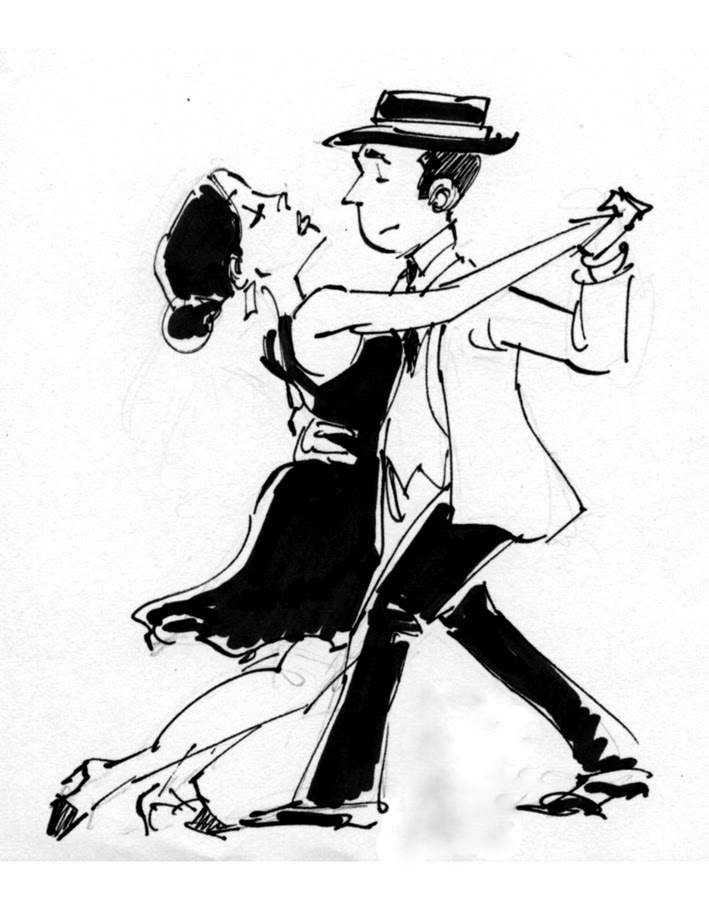 “Now!” He snapped the Roman profile. “A demonstration!” At his nod, Little Andy put on a scratchy record, and Mrs. Tomaso rose from the chair where she had been waiting. She slunk to his side, her black hair swinging down her back, and stood there, rigid. Mr. Tomaso slipped his arm around her waist and crushed her to him, causing an audible gasp from the students. The music dipped and swirled, as did the Tomasos, around the gym like trout in a stream, birds on the wing, anything and everything graceful and exotic. They had us then, he and Mrs. Tomaso and Mrs. Newcomb, who stood at the side of the gym, her pony tail bobbing to the music. We stared, agog, enthralled. Even the skeptics could not deny the allure, the pulse of the dance.
By the end of six weeks, straw-haired girls danced their way into the hearts of bull-riding cowboys whose lizard skin boots lined the gymnasium wall. The athletes, the scholars, the hoods, all dipped and swayed, titillated by Mr. Tomaso’s instructions to “always lead with your chest, young swains.” And we did, right into the soft young bosoms of the girls who would be our friends and wives someday. It was grand and amazing!
My life was complete when Ginnie consented to be my partner for the final week. When the week ended, I asked her for a date, a thing I hadn’t dared do. She said “Yes,” and her answer made music! In a hormone-driven euphoria, I released her and tangoed alone, out of the gym, down the hall, and into Mrs. Newcomb’s office, the famous tennis shoe on my mind. I had asked Ginnie for a date, and she had said yes. I could do anything now!
Mrs. Newcomb caught me with my hand in her desk drawer.
“Stop!” Her voice froze me where I stood. “Withdraw whatever is in your malfeasant fingers.”
I lifted my hand clear of the desk, and it hung there, the side with Mrs. Newcomb’s name and the dirty word showing, naturally.
“Aha! Just as I thought!” She walked around the desk to stand in front of me. She was the only person I ever knew who could look down on anybody, even though they were a head taller than her. She looked down at me. Abruptly, she turned on her bird-like heel and strolled across the room, hands behind her back.
She faced me. “Roy, I know a lot about that shoe. I know Eddie Redmond isn’t responsible for the graffiti. For one thing, my name’s spelled right. I know it was put there to do him in. I imagine it worked. What I don’t know, and I confess I’m curious, is how it was done, who did it, and why. If you tell me, I’ll forget I ever saw you tonight. No–I’ll do better. I’ll let you walk out of here with that shoe. All you have to do is tell me the story.”
My high school past and future flashed before my eyes. Lovely Ginnie, Mr. Chandler’s arm, the whole lot, including the fame that would be mine if I possessed The Shoe. All I had to do was deliver Ginnie to her mother, probably with minimal consequences. What would Mrs. Newcomb do after all this time, anyway? Tell the story and the trophy would be mine.
I put the shoe back in the drawer. “You keep it, Mrs. Newcomb,” I said, not defiantly, but sadly. “I, uh, uh–” I wanted to say that I didn’t know the story, but it wasn’t possible to lie to Mrs. Newcomb. “I can’t tell it.”
She shook her head. “Go on home, Roy. We’ll talk tomorrow about your violation of my privacy.”
I turned toward the always-open door. I had no more to say, and I thought she didn’t.
“Roy?”
“Yes, ma’am?” I didn’t turn around.
“Ginnie might like to know you wouldn’t betray a friend for a moronic idea of glory. I’ll tell her.”
I took two more steps away from the wonder that was Mrs. Newcomb, but she hadn’t finished.
“Life will test you, boy,” she said. “I think you’ll pass.”
 Tuesday in Texas
Another wonderful tale. Thanks again. Loved it.
LikeLike
Thanks, Danie-Boo, my faithful and long-time friend. xxoo
LikeLike
Becky, Yes! Some of our teachers are right there! Ha. (Wish we had had a tango teacher, though…or did we?) You are such a delightful writer. Thank you so much for diverting your talent, as a special gift to us.
Lovingly keeping my “equals under my equals” to this day, Dolores
LikeLike
Well, we didn’t actually have a tango teacher, but there was a rhythm to life in TC, and in the schools. We had the usual bumps of growing up, but the overall feeling was safe and pleasant. Thanks for your nice comments, especially about this being a gift to our class. That makes me feel good, because that’s what I set out to do. xxoo
LikeLike
couldn’t stop reading, felt in the moment
LikeLike
Thanks, Ron. That’s just what I was going for — in the moment!
LikeLike